Tunbridge Wells guides
Fire safety articles for Tunbridge Wells buildings
Read practical writing on fire risk management in Tunbridge Wells. If something in your home or building worries you, send a free enquiry and a specialist firm will respond with advice tailored to your situation.
Writing on fire safety in Tunbridge Wells
Understanding the fire risk assessment visit
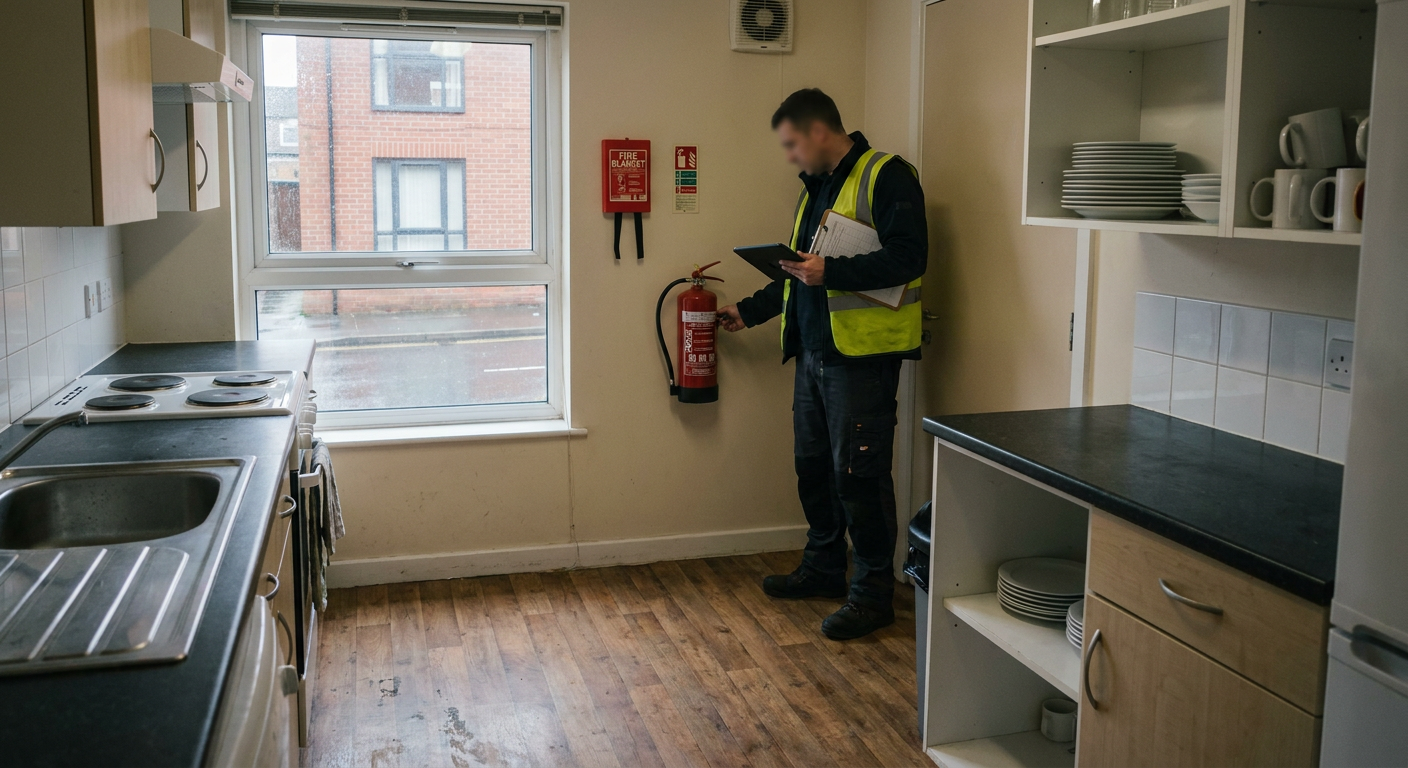
A fire risk assessment is the starting point for managing fire safety in any shared building or rented home. The process often feels abstract until someone walks through the rooms, checks the doors and looks at how people would get out if smoke filled the corridors.
The specialist firm that carries out the work examines the layout, the materials used in the walls and ceilings, and the habits of the people who live or work there. They look for blocked exits, missing signage and faulty closers on fire doors. Every finding goes into a written report that names what needs attention and how quickly it should be done.
For landlords and managing agents in Tunbridge Wells, arranging this visit is a legal duty rather than a choice. Read more about what happens during a [fire risk assessment visit](/stories/fire-risk-assessment-visit-what-the-assessor-checks) and find out whether your building requires one under current [rules for responsible persons](/what-the-law-asks/responsible-person-duties-tunbridge-wells). Knowing what the assessor checks removes the guesswork from preparing your home or building for their arrival.
Fire doors, compartments and stopping the spread
A fire door only works when it closes fully, seals against the frame and has no gaps larger than a few millimetres around the edges. In blocks of flats and houses in multiple occupation, these doors form part of a wider compartmentation strategy designed to keep smoke and flames inside the room where they start.
Compartmentation surveys examine the hidden spaces too: the voids above ceilings, the risers carrying pipes between floors and the points where cables pass through walls. A gap left around a pipe can defeat the purpose of a solid brick wall. The specialist firm traces these routes and records every breach.
If you manage an HMO in Tunbridge Wells, the requirements for [fire door inspection](/what-we-cover/fire-door-inspection-tunbridge-wells) and [compartmentation](/what-we-cover/compartmentation-survey-tunbridge-wells) overlap significantly. Landlords renting to students face similar obligations under [student accommodation fire safety](/what-we-cover/student-accommodation-fire-safety-tunbridge-wells) standards. Understanding how often [fire doors should be checked](/what-the-law-asks/fire-door-check-frequency-tunbridge-wells) helps plan maintenance before a problem becomes urgent.
Planning escape routes in smaller buildings
Escape routes in small offices or converted homes rarely have the width or the alternative exits found in larger commercial buildings. Travel distances matter because smoke moves faster than most people expect, and a single staircase can become impassable within minutes of ignition.
The layout of furniture, the position of storage and the direction doors open all affect how quickly someone can reach fresh air. Fire safety regulations set maximum travel distances depending on the risk level of the space. Where those limits cannot be met, additional measures such as early warning systems or protected lobbies become necessary.
Read about [escape routes and travel distances in small offices](/stories/escape-routes-and-travel-distances-in-small-offices) to see how these measurements apply in practice. For buildings with multiple storeys, [dry risers and firefighting access](/stories/dry-risers-and-firefighting-access-in-blocks-of-flats) determine whether crews can reach upper floors without dragging hoses up stairwells. Both topics feed directly into the [evacuation plans](/what-we-cover/fire-evacuation-plans-tunbridge-wells) that a specialist firm writes for each building.
Older buildings and listed properties
Period properties in Tunbridge Wells present specific challenges for fire risk management. Thick timber beams, lath and plaster walls and narrow staircases were built long before modern fire safety thinking existed. Altering them to meet current standards risks damaging the features that make them worth preserving. Listed building consent adds another layer of restriction. The specialist firm must find solutions that protect the occupants without harming the fabric of the building. Read about [fire safety in listed buildings and period properties](/stories/fire-safety-in-listed-buildings-and-period-properties) to see how these constraints shape the work. The same tension between heritage and safety applies to churches, village halls and other community spaces across the area. A place of worship might have heavy oak doors that cannot be swapped out, while a Victorian hall used for local events may lack any meaningful separation between its main room and the only staircase out. The considerations for [churches, halls and community buildings](/stories/fire-safety-in-churches-halls-and-community-buildings) differ from those for a residential home, but the principle remains: the assessor has to work within what the structure allows.
Keeping records and meeting legal duties
Fire safety law in England places responsibility on a named person or organisation. That duty includes keeping the assessment up to date, maintaining equipment and ensuring anyone who uses the building knows what to do in an emergency. Paperwork alone does not prevent fires, but poor record keeping leaves gaps that go unnoticed until something fails.
The Fire Safety (England) Regulations 2022 added specific requirements for buildings containing multiple dwellings. These include providing information to residents and checking fire doors at set intervals. Understanding the [2022 regulations](/what-the-law-asks/fire-safety-england-regulations-2022-tunbridge-wells) clarifies what changed and who it affects.
A specialist firm can draft your [fire safety policy and procedures](/what-we-cover/fire-safety-policy-and-procedures-tunbridge-wells) so they reflect the actual building rather than a generic template. If the council sends a [fire safety letter](/what-the-law-asks/fire-safety-letter-or-notice-tunbridge-wells), having current records makes responding straightforward. Regular reviews ensure the [assessment stays valid](/what-the-law-asks/how-often-to-update-an-assessment) as occupancy or layout changes.
Ask a question about your building
Send a short description of your home or building. A specialist firm will reply with advice on what is needed next. There is no charge for the enquiry and no obligation to proceed.
- No fee to enquire
- Reply from a specialist firm
- No commitment required