Tunbridge Wells
Fire risk management services in Tunbridge Wells
Send an enquiry about your home or building. It costs nothing to ask, and a specialist firm will reply with what needs doing next, without any obligation to proceed.
Every fire safety service available in Tunbridge Wells
Finding out what is wrong with the building
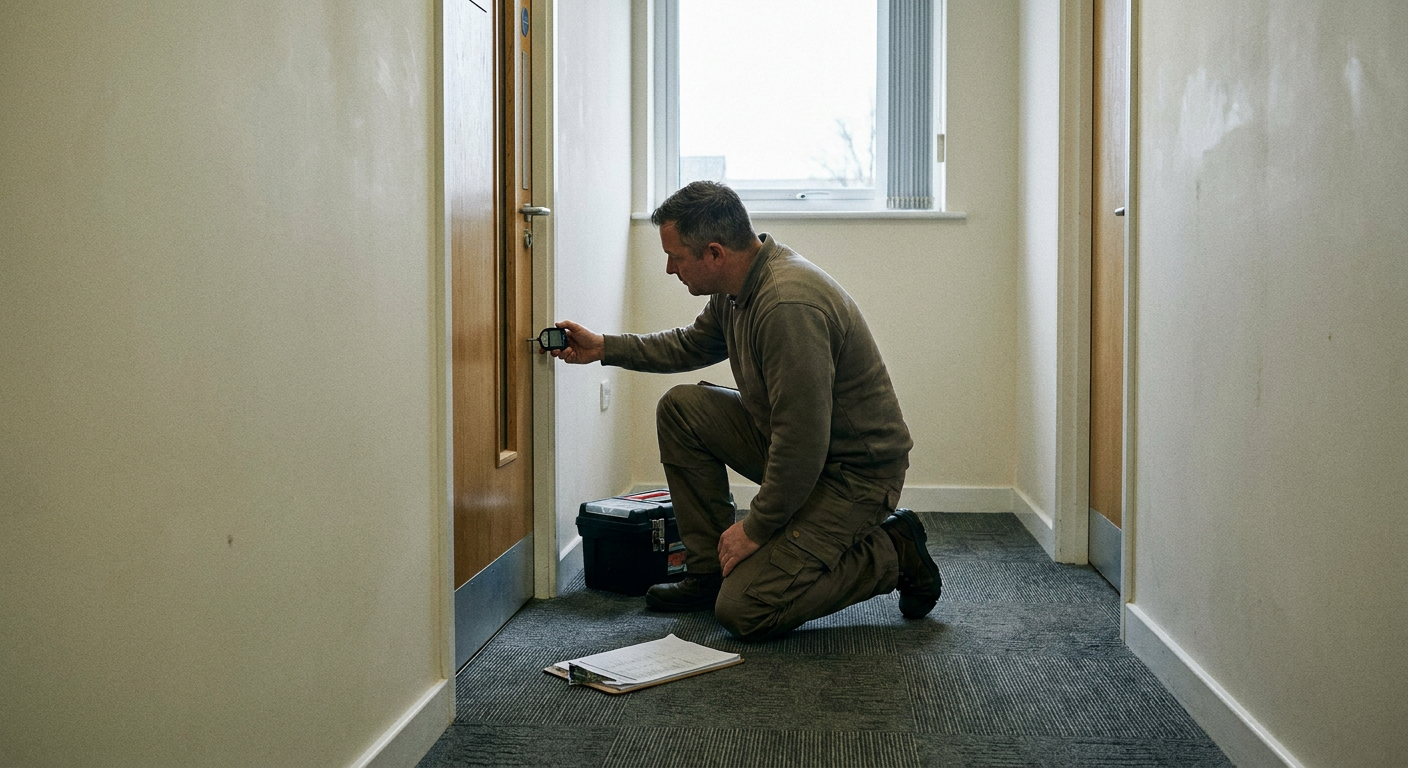
A fire risk assessment is the starting point for everything else. The specialist firm walks through the building, notes where a fire could start, how it might spread, and who would be in danger. They produce a written record of what they find and what needs fixing.
If you are not sure whether your home or workplace needs one, the rules depend on the type of building and who uses it. Landlords renting out rooms face different requirements from someone living alone in a house. Read more about arranging a fire risk assessment before deciding what to do.
For houses in multiple occupation, the assessment looks at shared kitchens, hallways and escape routes that several households use every day. Student halls have their own set of problems because of the number of people sleeping under one roof. Separate pages cover HMO assessments and student accommodation fire safety in detail.
Doors, walls and stopping the spread of fire
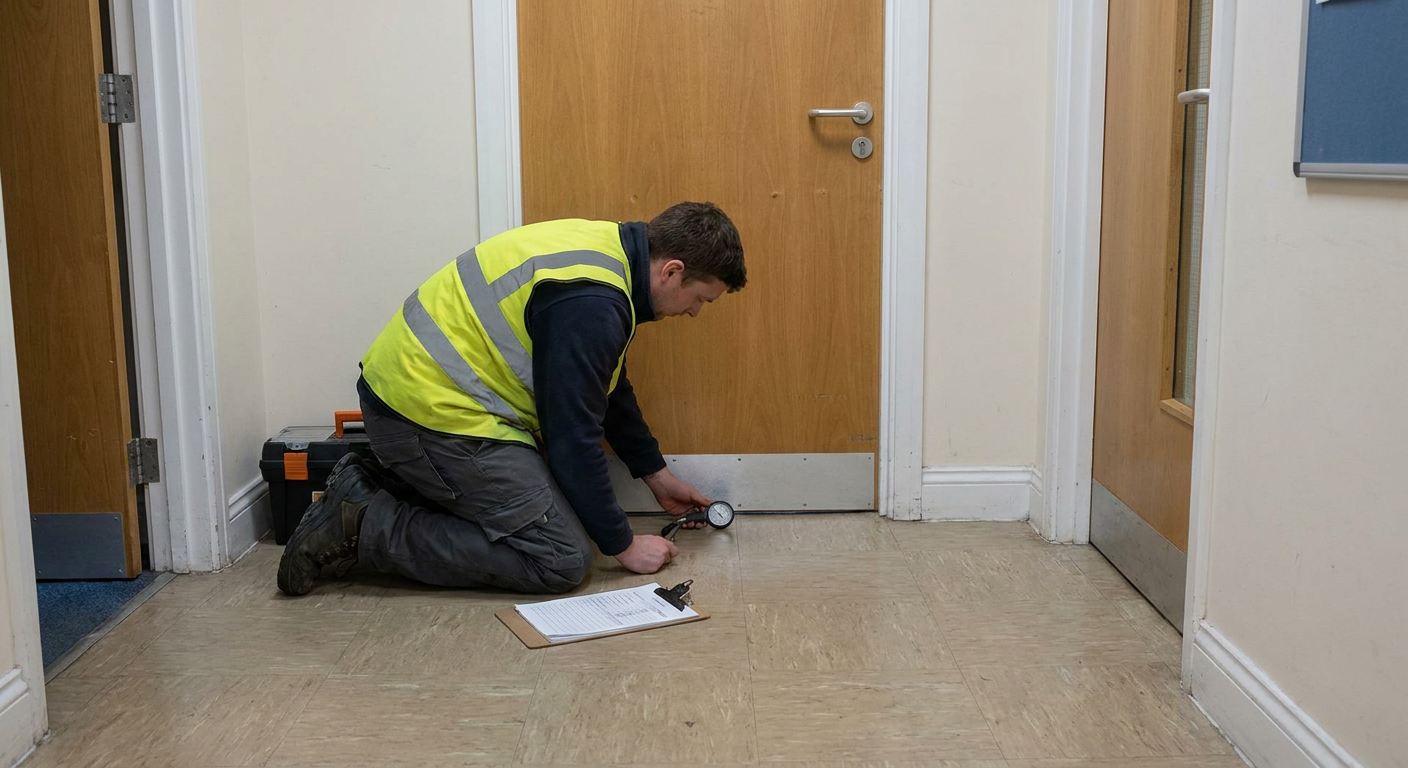
Once the risks are known, the physical parts of the building need checking. Fire doors are meant to hold back smoke and flames long enough for everyone to get out. A specialist inspects the hinges, seals, gaps and closers to confirm each door does what it should. Find out what a fire door inspection involves if you have noticed doors that do not shut properly or have visible damage.
Compartmentation is the term for dividing a building into sealed sections so a fire stays in one place. In blocks of flats and converted houses, the walls and floors between homes must resist fire for a set period. A compartmentation survey checks whether those barriers are intact, especially where pipes or cables pass through them.
A fire strategy pulls all of this together. It sets out how the building is designed to keep people safe, from the materials used in the walls to the routes people follow when they leave. Read about fire strategy documents if you manage a larger or more complex building.
Getting people out safely
An evacuation plan tells everyone in the building exactly where to go when an alarm sounds. It covers which exits to use, where to gather outside, and who checks that no one is left behind. The plan has to fit the actual layout of the building rather than relying on generic advice. See what to include in a fire evacuation plan for specific guidance.
Plans only work if the people in the building understand them. Fire safety awareness training gives staff and residents the basics: what the alarms sound like, why certain doors must stay closed, and how to raise the alarm themselves. For those given extra responsibility, fire warden training goes further into sweeping areas, directing people and liaising with the fire service.
Paperwork, policies and ongoing duties
The law expects the responsible person to keep records and follow a set of duties. That includes having a written fire safety policy and procedures that everyone can read. These documents show how the building is managed day to day, not just during an emergency. Find out what a fire safety policy should contain.
Some landlords and business owners appoint a nominated person to handle fire safety on their behalf. This is useful when the building has multiple occupiers or when the owner lives elsewhere. The nominated person service explains how that arrangement works in practice.
Alarms and extinguishers need regular testing to confirm they still function. A specialist firm advises on how often to check them and what to record. Guidance on fire alarm and extinguisher testing covers the frequency and the paperwork involved.
Where these services apply
These services cover Tunbridge Wells and the surrounding towns and villages in West Kent. Buildings in Tonbridge and Penshurst fall within the same area, and the same specialist firms operate across all of them.
The legal side of fire safety changes depending on the building type. Flats above shops, listed buildings and community halls all present different challenges. The section on fire safety rules for landlords gathers the relevant guides in one place, including how often to update an assessment and what to do if you receive a letter from the council about fire safety.
Whatever the building, the process starts with an enquiry. Describe what you have noticed or what you need, and a specialist firm will take it from there.
Ask about fire safety in your building
Write a few lines about your home or building. A specialist firm reads it and replies with what to do next. Sending an enquiry does not commit you to any work or cost.
- No fee to enquire
- Specialist firms do the work
- No obligation to proceed
What we cover
- Fire Risk Assessment
A fire risk assessment in Tunbridge Wells looks at escape routes, fire doors, alarms and who is responsible, with findings set out in a written report.
- Fire door inspection
Fire door inspection in Tunbridge Wells checks gaps, seals, hinges and closers on flat entrance and communal doors, with findings and repairs listed.
- Compartmentation
A compartmentation survey in Tunbridge Wells traces walls, floors and service holes in flats and HMOs to show where fire and smoke could spread.
- Fire strategy
A fire strategy for a building in Tunbridge Wells sets out how it stays safe: escape routes, compartmentation, alarms and how people get out.
- Evacuation plans
Fire evacuation plans in Tunbridge Wells cover escape routes, assembly points and who helps anyone needing assistance to leave the building safely.
- Awareness training
Fire safety awareness training in Tunbridge Wells gives staff the basics: spotting hazards, raising the alarm and what to do when it sounds.
- Fire warden training
Fire warden training in Tunbridge Wells covers sweeping a building, roll call at the assembly point and the day to day duties a marshal takes on.
- Nominated person
A fire safety nominated person service gives owners and landlords in Tunbridge Wells a named point of contact for fire duties, records and regular reviews.
- Policy and procedures
A fire safety policy and procedures document sets out who does what, how drills and alarm tests are run and how records are kept in Tunbridge Wells.
- Alarm & extinguisher
Fire extinguisher testing and fire alarm checks in Tunbridge Wells: what is tested, how often, and the records a building owner should keep.