Tunbridge Wells
Do I need a fire risk assessment in Tunbridge Wells?
Find out what paperwork to gather, what the specialist asks before attending, and what happens during the visit. Sending an enquiry costs nothing and carries no obligation.
How to arrange a fire risk assessment in Tunbridge Wells
Who arranges the assessment and who pays for it
If you rent a small shop in Tunbridge Wells, the question of who arranges the fire risk assessment usually comes down to your lease. The law places the duty on the responsible person, which is whoever controls the premises. For a retail unit, that is typically the tenant. In shared buildings or blocks of flats, landlords carry the duty for communal areas. A fire risk assessment for landlords in Kent covers hallways, stairwells and shared plant rooms, while each commercial tenant handles their own space.
Before ringing anyone, dig out your floor plan if you have one, details of any alarm system, records of recent electrical tests and your tenancy agreement. The specialist firm will ask about the building's age, layout, occupancy and any previous fire safety work. Gathering this paperwork speeds up the booking. If you run a first fire risk assessment for a small business, having these documents ready means the assessor can focus on the building rather than chasing paperwork.
What happens during the fire risk assessment visit
The visit involves a walk through every area the responsible person controls. How long it takes depends on size. A single shop might take an hour; a mixed-use building with several floors takes longer. You do not need to close the shop or stop trading. The specialist works around normal activity, so staff and customers carry on as usual.
Will the assessor need to get into every flat, cupboard and loft space? Yes. Fire spreads through hidden voids, so access matters. In a residential block, the specialist needs entry to individual dwellings to check detection, escape routes and separation between units. This is why arranging a fire risk assessment for flats above a shop requires cooperation from residents and the commercial tenant below. Mixed-use buildings face extra scrutiny because a fire starting in the shop threatens the homes above. Read more about fire safety for flats above shops in Tunbridge Wells to understand where responsibilities sit between landlord and tenants.
What the report tells you and when it arrives
After the visit, the specialist writes a report detailing hazards found, who is at risk, and what actions are required. It does not just list problems. It sets priorities and suggests practical steps. Who pays for the work it lists depends again on control. If the hazard sits within your leased area, you fund the fix. Communal issues fall to the landlord or managing agent.
Reports typically arrive within a few working days. If something serious surfaces on the day, the assessor raises it immediately so you can act before the document lands. How often a fire risk assessment is needed depends on changes to the building or its use. There is no fixed expiry date, but the responsible person must keep it under review and update it after alterations, incidents or shifts in occupancy. Guidance on how often to update a fire risk assessment explains when a fresh visit becomes necessary.
Signs you may need a fire risk assessment
A missing certificate is obvious, but other signs are harder to read. Different clues point to different gaps in fire safety management.
- No written record of fire risks anywhere
- The law requires a written assessment for most non-domestic premises. Commissioning one settles whether the building meets current standards.
- Letter from the local council about safety
- Councils issue notices when they suspect non-compliance. A fire safety letter from the council explains exactly what they expect and by when.
- New tenants moved in or layout changed
- Alterations change escape routes and fire loads. An updated assessment confirms the current arrangement still protects everyone inside.
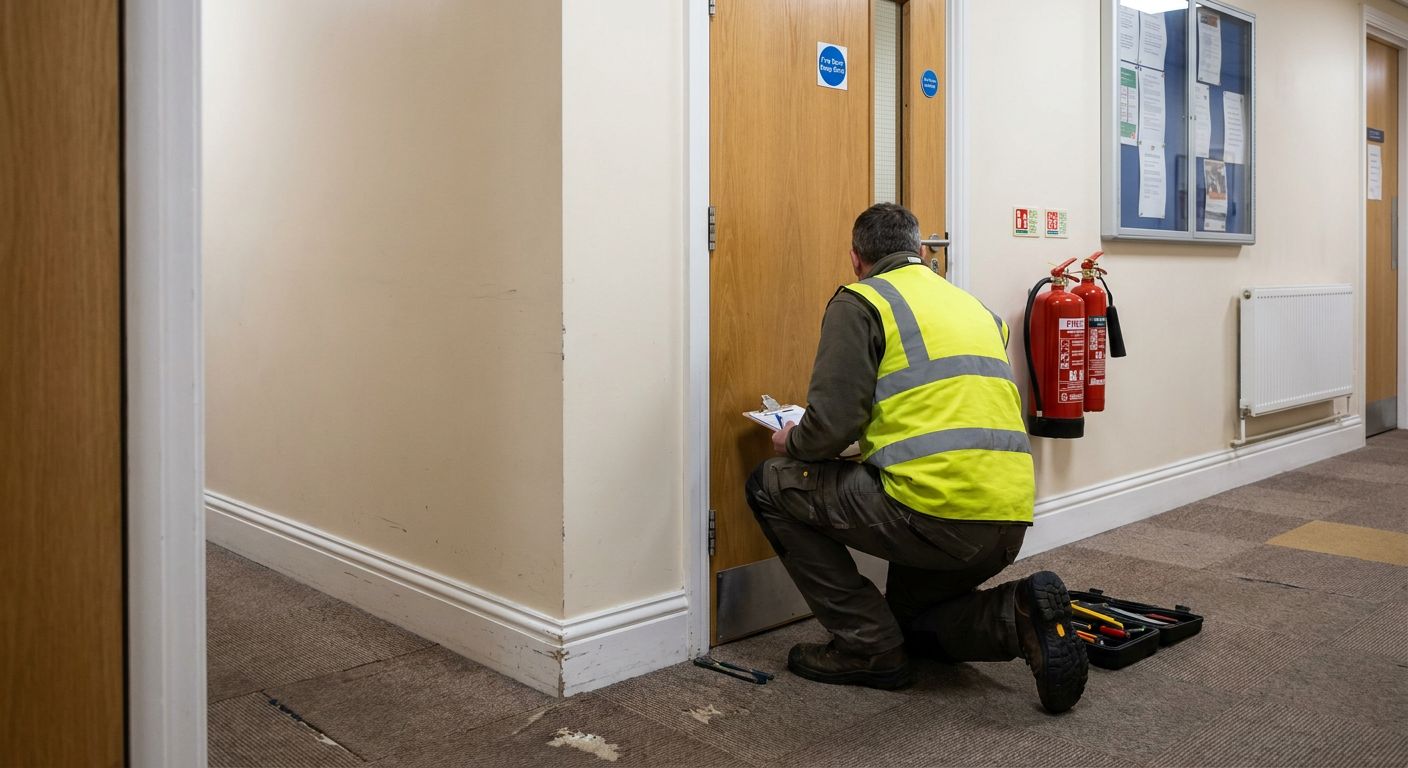
- Fire doors propped open or damaged seals
- Compromised doors fail to hold back smoke. A fire door inspection determines if replacements or repairs are needed to restore protection.
- Staff unsure where to go in a fire
- Confusion during an alarm suggests missing training or unclear plans. Fire safety awareness training gives staff specific instructions for their building.
Typical costs for fire risk assessments
Prices vary because buildings differ. A ground-floor shop takes less time than a converted house split into flats. Layout, number of occupants and existing safety measures all shift the figure within these ranges.
-
Small shop or office assessment
£150 - £300
Floor area and whether an alarm system is already installed and maintained.
-
HMO or small block of flats
£250 - £500
Number of units, shared spaces and complexity of the escape routes.
-
Mixed-use building assessment
£400 - £800
Separation between commercial and residential parts and overall footprint.
-
Full compartmentation survey
£600 - £1,200
Building height, number of fire-resisting walls and ceiling voids to inspect.
These figures indicate typical market rates for this type of work. Nothing here is a quotation. Only a site inspection settles a price for a specific building.
Arrange a fire risk assessment
Send details about your building in Tunbridge Wells. The information goes to a specialist firm who will respond with next steps. There is no charge for the initial enquiry and no obligation to proceed.
- No fee to enquire
- No obligation to book
- Local specialists only