Tunbridge Wells
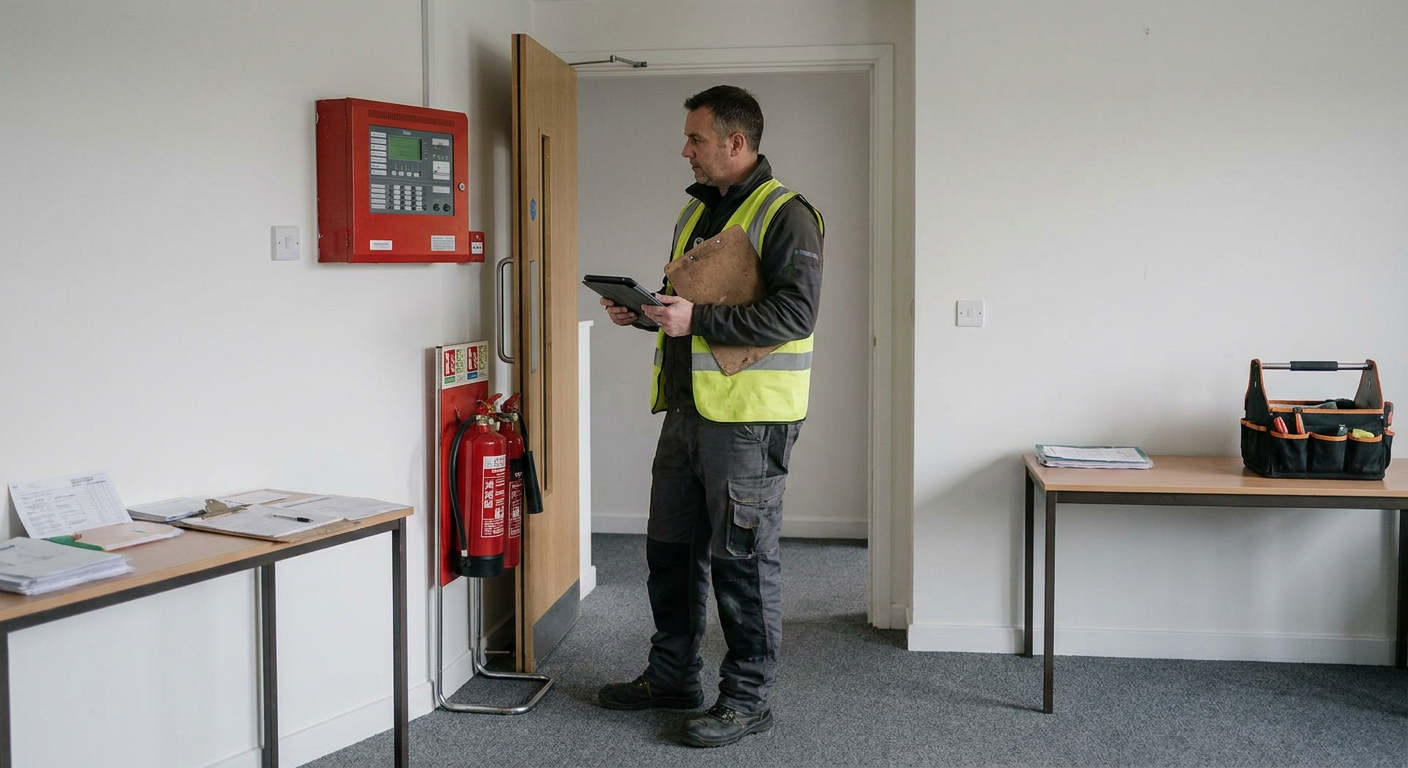
Student accommodation fire safety in Tunbridge Wells
Send a plain enquiry about your student let or hall. It costs nothing to ask, and you will hear back with what the specialist firm can do for your building.
Assessments for shared student houses and halls
A shared house rented to five or more students forming separate households is a house in multiple occupation. The law requires a fire risk assessment for any HMO, so a shared house fire risk assessment in Kent is not optional. A specialist assessor visits the building, checks escape routes, examines detection and reviews management arrangements.
For larger buildings such as purpose-built halls of residence, the assessment covers more ground. Fire strategy documents, compartmentation between floors and the performance of dry risers all fall within scope. Student accommodation fire safety in Tunbridge Wells depends on this document being accurate and current. When tenancies turn over each year, the risks change, and the assessment must reflect that. An out-of-date record leaves gaps a council inspector or a fire officer will find quickly.
The responsible person, usually the owner or managing agent, holds the duty to arrange this work. A specialist firm carries out the inspection and writes the report. If you manage several properties across Tunbridge Wells, each one needs its own assessment, recorded separately. Read more about [arranging a fire risk assessment](/what-the-law-asks/arranging-a-fire-risk-assessment) or the specific requirements for an [HMO in Tunbridge Wells](/what-we-cover/hmo-fire-risk-assessment-tunbridge-wells).
Between tenancies: what to check before new students arrive
Summer changeover is the window to complete student let fire safety checks without disrupting term time. A specialist firm can schedule inspections while rooms sit empty, meaning assessments happen without disturbing study periods or exam weeks.
Between tenancies, a thorough check covers several areas. Smoke detectors need testing and cleaning, because dust from moving boxes and furniture often causes false alarms once the autumn term begins. Battery-operated units should be replaced with mains-wired devices where possible, since students frequently remove batteries to silence nuisance alarms. Any detector head wrapped in cling film or carrier bags must be uncovered and tested immediately.
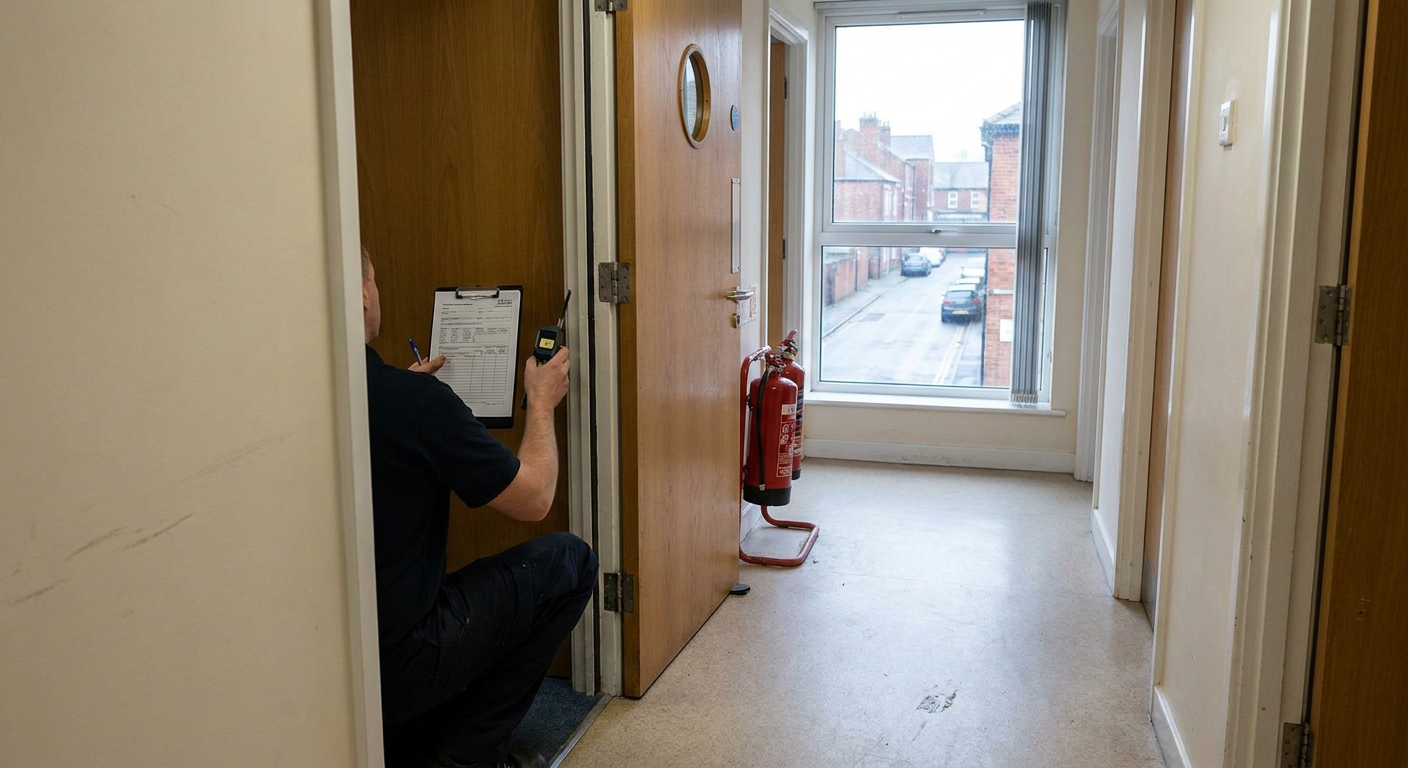
Flat entry doors take heavy use. Hinges loosen, self-closers fail and intumescent strips get painted over or gouged by furniture being dragged through frames. A [fire door inspection](/what-we-cover/fire-door-inspection-tunbridge-wells) identifies which doors still close fully onto their seals and which need attention from a carpenter. Propped-open doors defeat the entire compartmentation strategy of the building, so checking the hardware that prevents this is part of the routine.
Escape routes must remain clear. Bicycles, bins and abandoned furniture accumulate in corridors during move-out week. Removing these before new tenants arrive resets the standard. Find out [how often an assessment needs updating](/what-the-law-asks/how-often-to-update-an-assessment) when turnover is high.
Kitchens, cooking and choosing the right detection
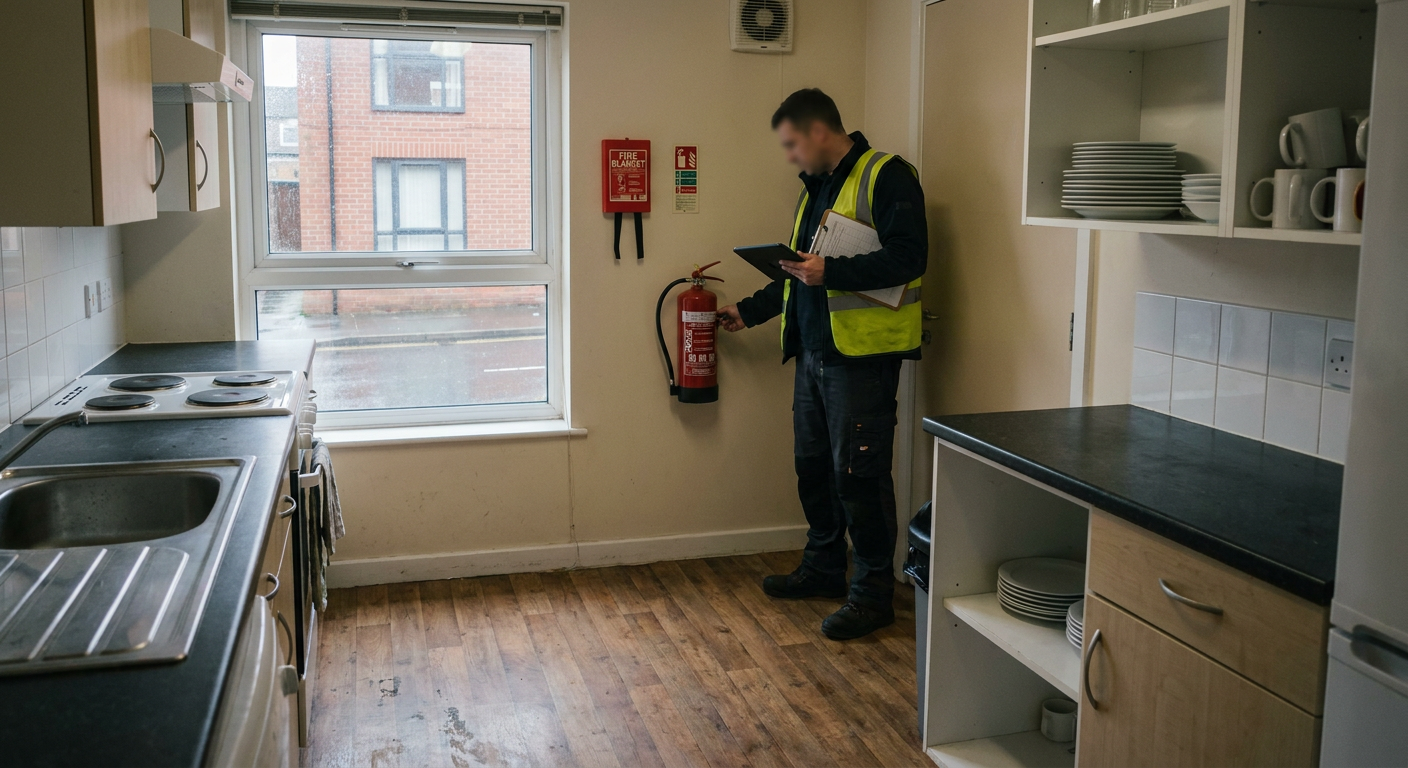
Shared kitchens generate most false alarms in student housing. Toast, frying oil and steam from kettles trigger optical smoke detectors constantly, which trains residents to ignore the sound. Replacing smoke detectors with heat detectors in kitchen areas solves much of this problem. A kitchen heat detector responds to a rapid rise in temperature rather than particulates in the air, so burnt toast does not set off the system while a genuine fire still triggers the alarm.
The choice between rate-of-rise and fixed-temperature heat detectors depends on the cooking equipment and ventilation in the room. A specialist firm advises on the correct type during the assessment. Detection in the corridor outside the kitchen usually remains smoke-based, providing early warning if a fire escapes the room.
Cooking causes more fires in student accommodation than any other activity. Beyond detection, the physical layout matters. Are cookers positioned away from combustible surfaces? Do extractor hoods carry grease buildup that could ignite? These questions form part of the wider review. Proper [compartmentation](/what-we-cover/compartmentation-survey-tunbridge-wells) ensures that if a kitchen fire starts, it stays contained long enough for everyone to leave the building safely.
Fire doors, damage and keeping them closed
Fire doors in student flats endure constant abuse. Doorstops wedged underneath, heavy bags hung on handles and furniture pushed against them all prevent proper closure. A door that does not latch into its frame cannot hold back smoke or flame. Managing this requires both maintenance and attention to how the doors are used. Hardware checks confirm that hinges hold three screws per hole, that self-closing devices pull the door shut from any angle and that intumescent strips remain unbroken around the edges. The legal requirement for checking frequency applies to all residential buildings, and a specialist firm clarifies [how often fire doors should be checked](/what-the-law-asks/fire-door-check-frequency-tunbridge-wells) based on the building type and occupancy level. When damage occurs, patching a fire door rarely restores its rating. The responsible person must keep records of every inspection and repair. If a student damages a door, the cost of replacement falls to the landlord, but the duty to fix it promptly remains absolute. Leaving a damaged door until the next scheduled inspection creates a gap in protection that lasts weeks or months.
Responsibility when students tamper with equipment
Students removing detector batteries or covering sensor heads is a persistent problem. The legal responsibility for maintaining fire safety systems sits with the responsible person, regardless of tenant behaviour. This means the landlord or managing agent must ensure detectors function at all times, even when occupants interfere with them.
Practical steps reduce tampering. Mains-wired detectors with sealed tamper-proof batteries eliminate the easy removal of power. Detector guards protect heads from paint, tape and impact without blocking smoke entry. Clear tenancy agreements that specify the consequences of tampering help, but enforcement relies on regular inspection rather than trust.
If a council environmental health officer finds disabled alarms during a visit, the responsible person faces enforcement action. Keeping written evidence of regular testing shows that reasonable steps were taken. A nominated person service can handle this administrative burden. Learn about the [nominated person role](/what-we-cover/nominated-person-service-tunbridge-wells) and how it supports landlords who manage multiple properties or lack the time to oversee weekly tests themselves.
Getting students to take drills seriously
Alarm fatigue is real in student housing. Weekly tests become background noise, and evacuation drills are treated as jokes or ignored entirely. Changing this response requires clear communication from the start of each tenancy.
Briefings during induction week set expectations. Explaining why the alarm sounds and what the required response is takes only minutes but establishes the baseline. Written instructions pinned inside bedroom doors reinforce the message. Evacuation plans must be simple enough that someone unfamiliar with the building can follow them under stress. A specialist firm drafts [evacuation plans](/what-we-cover/fire-evacuation-plans-tunbridge-wells) tailored to the specific layout of each building.
Drills work best when they are unannounced but explained afterwards. Gathering feedback from wardens about blocked exits or confused residents highlights problems before a real emergency occurs. For staff managing halls, [fire warden training](/what-we-cover/fire-warden-training-tunbridge-wells) provides the structure to run these exercises properly. Wardens learn how to sweep floors, account for residents and communicate with the fire service upon arrival.
Records, inspections and dealing with the council
Tunbridge Wells Borough Council inspects HMOs and student accommodation under licensing conditions and housing legislation. Inspectors ask for specific documents. Having them organised and available prevents delays and demonstrates competence.
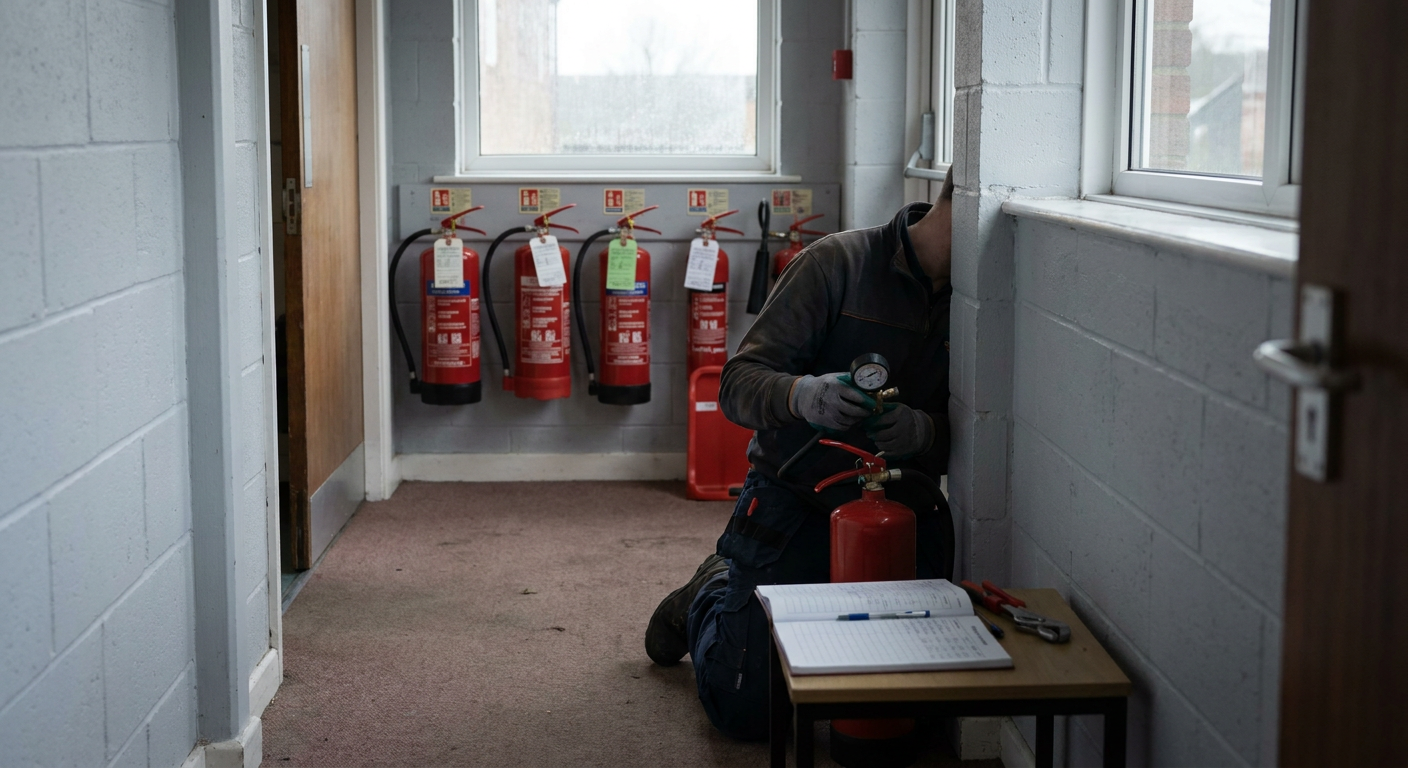
The core record is the fire risk assessment itself, signed and dated by the assessor. Alongside it, keep a log of weekly alarm tests, monthly emergency lighting checks and periodic fire door inspections. Maintenance certificates for extinguishers and alarm systems belong in the same file. If the council sends a formal letter requesting information or outlining concerns, responding accurately and quickly matters. Understanding what a [fire safety letter from the council](/what-the-law-asks/fire-safety-letter-or-notice-tunbridge-wells) asks of you prevents panic and ensures the reply addresses every point raised.
The [Responsible Person duties](/what-the-law-asks/responsible-person-duties-tunbridge-wells) extend beyond paperwork. They include acting on the findings of the assessment within reasonable timescales. If the report recommends upgrading detection or replacing doors, the council expects to see a plan and progress. Written [policies and procedures](/what-we-cover/fire-safety-policy-and-procedures-tunbridge-wells) formalise how the building is managed day to day, giving inspectors confidence that safety does not depend on one person remembering what to do.
Signs your student let has fire safety gaps
High turnover and shared facilities wear down protections fast. These are the things you might notice walking through a student house or hall between terms.
- 1
Doors that swing freely or jam
A flat entry door that fails to latch or drags on the carpet may have warped or lost its closer, leaving the escape route unprotected.
- 2
Detectors wrapped in plastic or foil
Covered sensor heads suggest repeated false alarms. The device cannot detect smoke while obstructed, leaving the room without warning.
- 3
Scorch marks near kitchen surfaces
Dark patches above hobs or behind toasters indicate previous overheating. Nearby materials may already be degraded and easier to ignite.
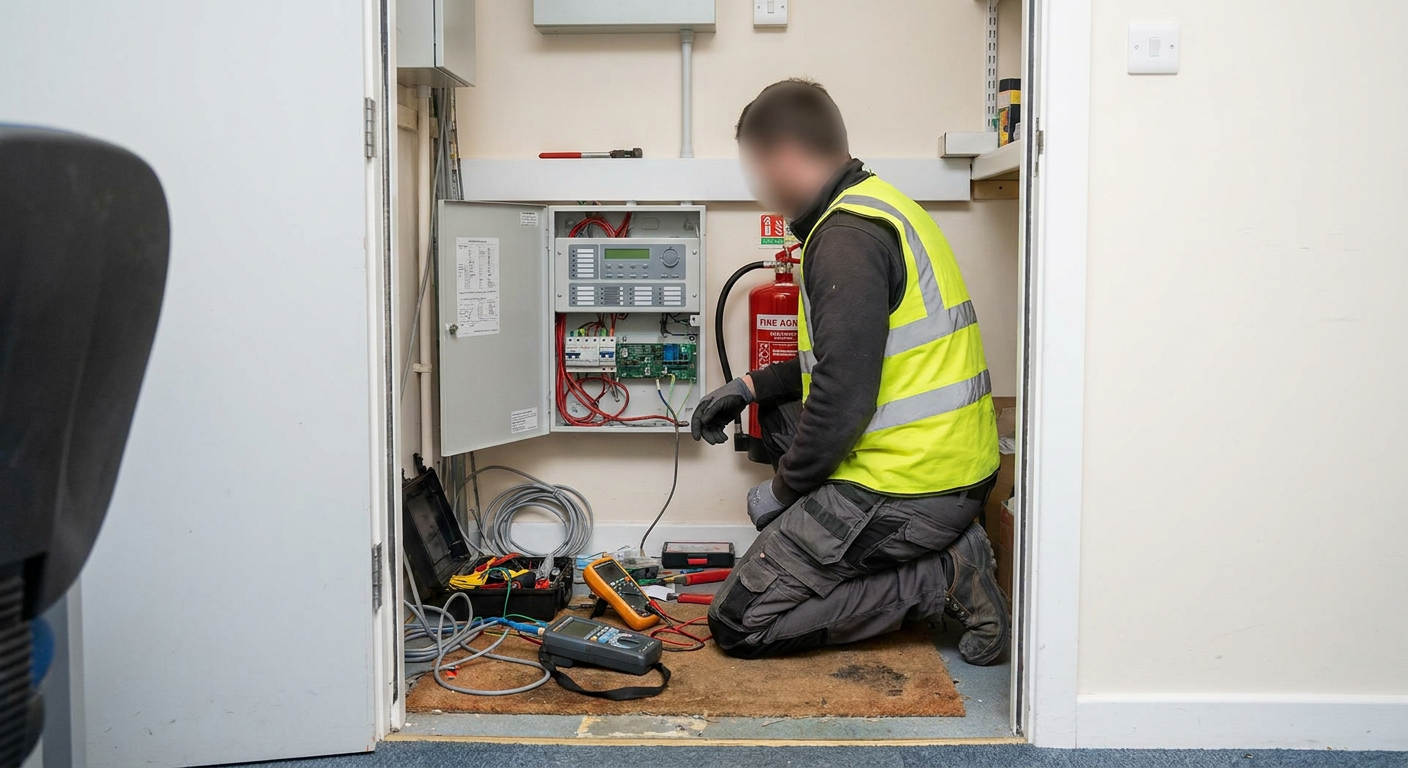
- 4
Corridors narrowed by stored items
Bikes, bins and suitcases left in hallways reduce the width of the escape route and add fuel to a path people need to walk down.
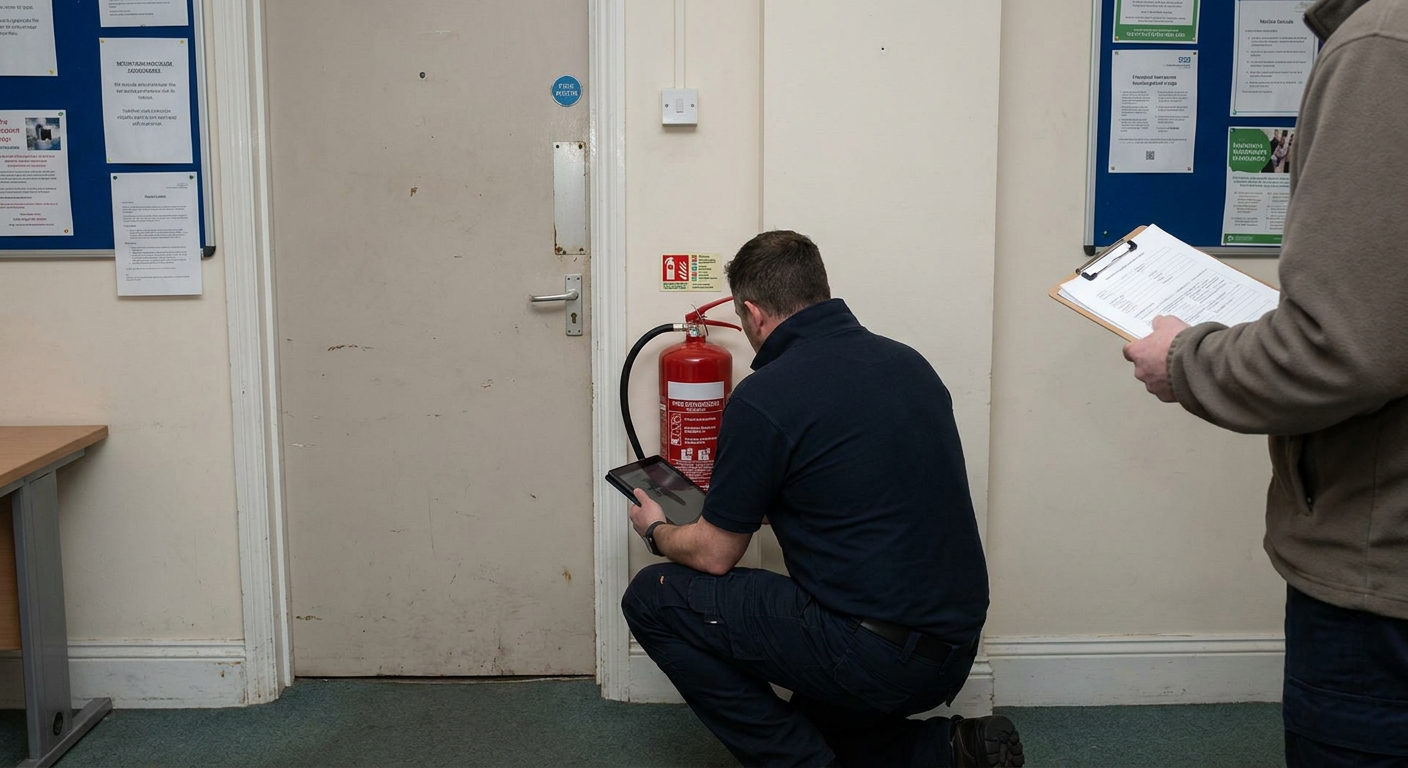
- 5
Missing or painted-over door strips
Intumescent seals around the door edge expand in heat to block smoke. Paint or gaps mean they will not perform as designed.
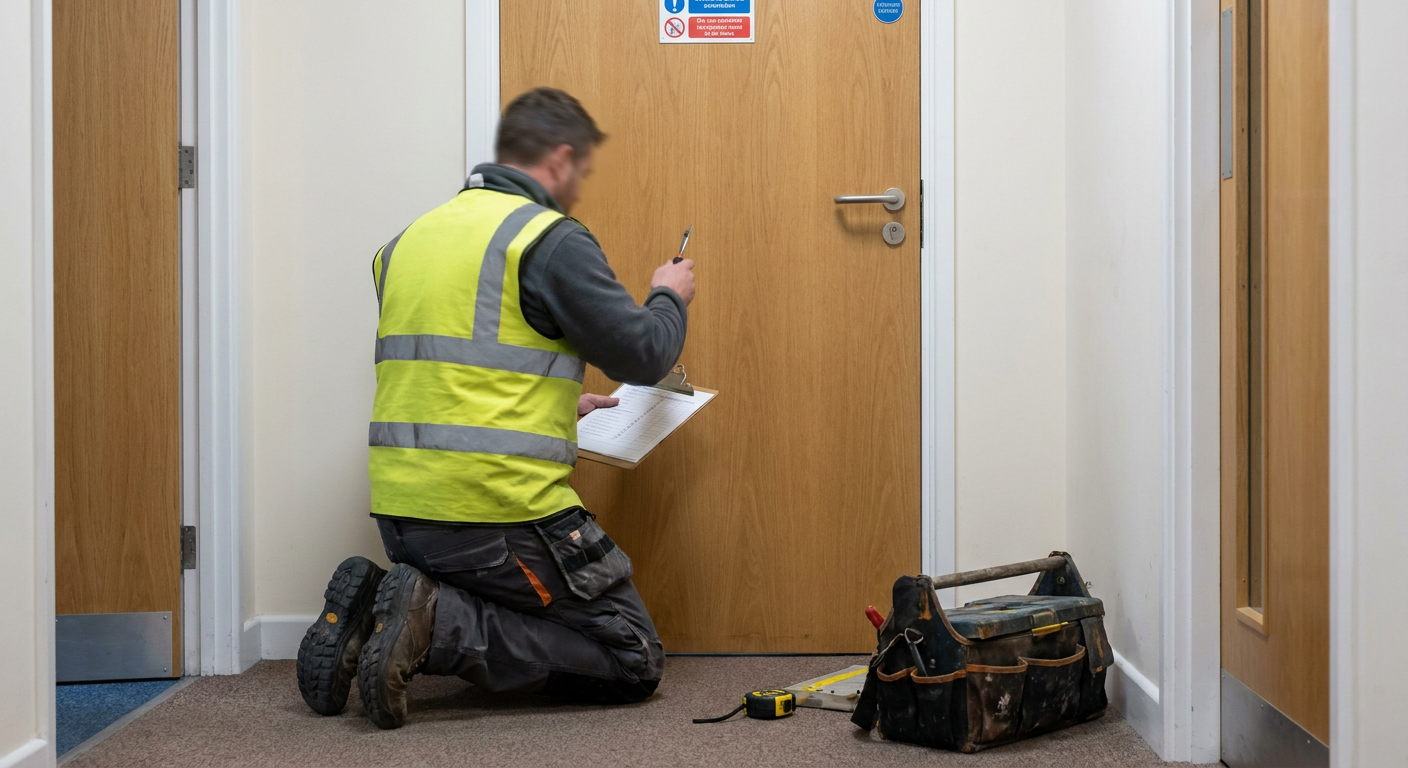
What the specialist covers
Fire safety services for student housing
- Fire risk assessment
- A full inspection of the building, identifying hazards, evaluating risks and recording the actions needed to meet legal duties.
- Fire door inspection
- In student flats doors get propped open or kicked shut. The specialist records each leaf, frame and closer so repairs happen before new tenants move in.
- Compartmentation survey
- Examining walls, floors and ceiling voids to confirm that fire and smoke cannot spread unchecked between rooms or storeys.
- Evacuation plans
- Drafting clear escape routes and assembly points tailored to the layout of the specific hall or shared house.
- Alarm and extinguisher advice
- Guidance on testing schedules, placement and the correct type of detection for kitchens, corridors and bedrooms.
- Nominated person service
- A named contact to manage ongoing compliance tasks, maintain records and respond to council correspondence on your behalf.
Ask about your student accommodation
Send the details of your building. A specialist firm will read them and reply with what they can do. There is no obligation to proceed.
- No fee to enquire
- Plain advice first
- Specialist firms do the work