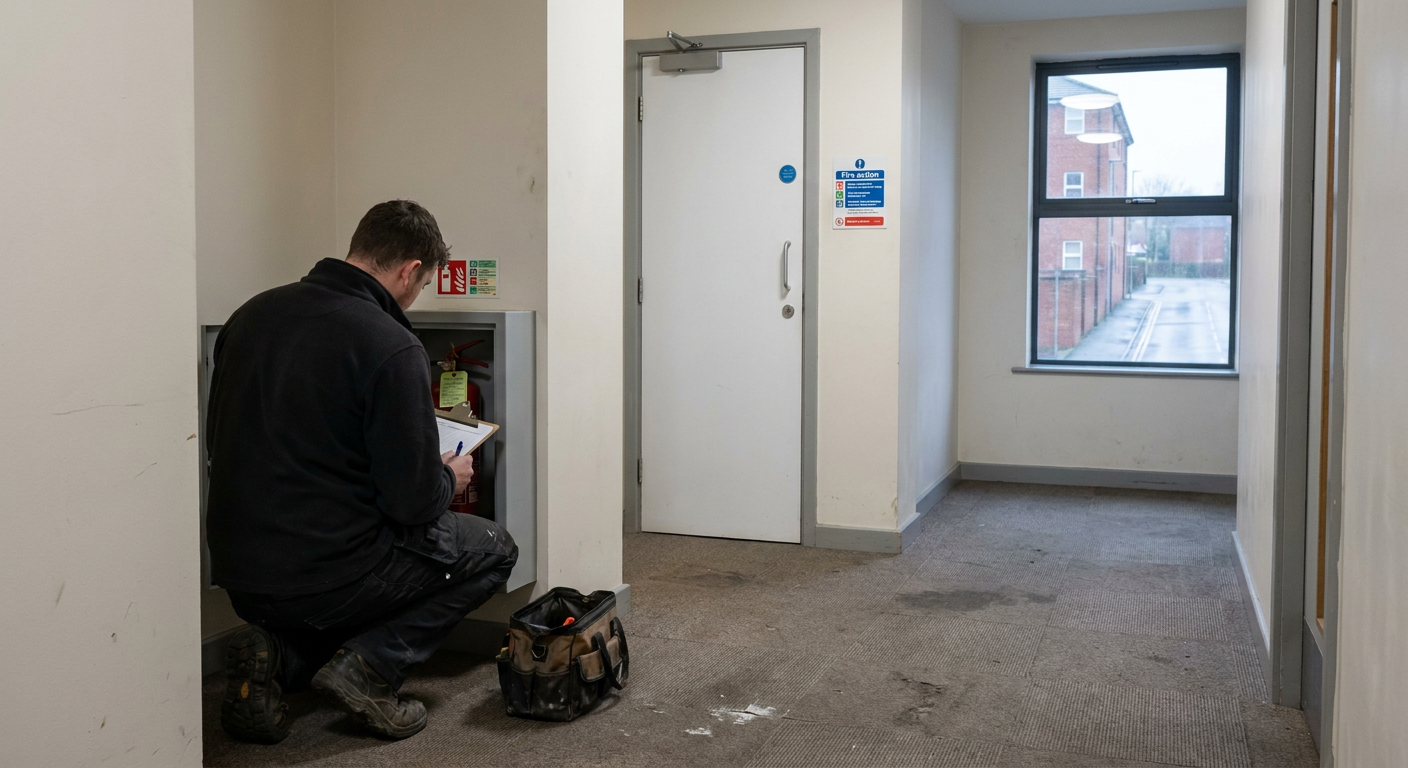
Tunbridge Wells
How often should fire doors be checked?
Find out what a competent check records and when to arrange a specialist inspection. Sending details costs nothing and carries no obligation to proceed.
How Often to Check Fire Doors at Home
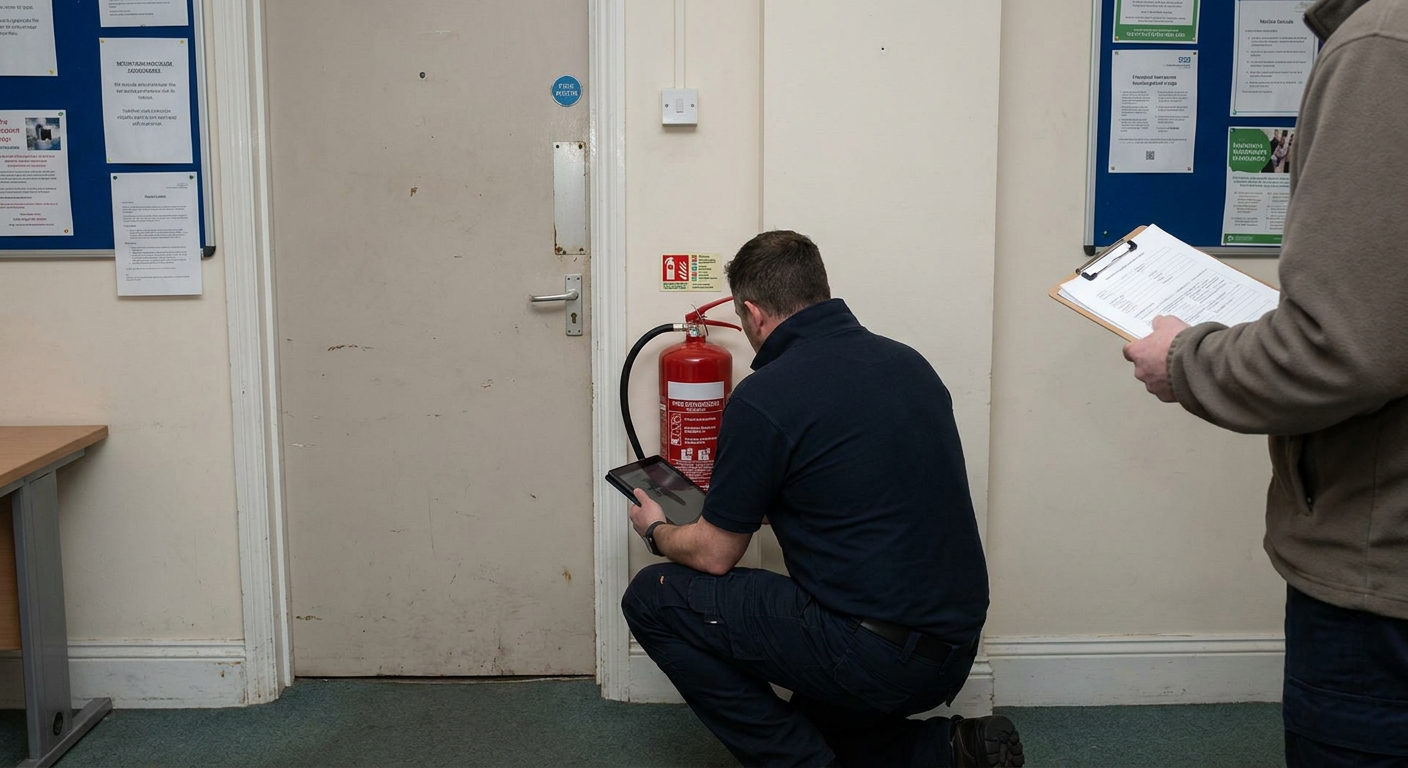
Why fire doors need regular checks
A fire door holds back smoke and flame long enough for people to leave a building. It only does that job if every part of it works as designed. Hinges loosen, seals shrink and closers wear out. A door that looked fine six months ago might now let smoke through.
The law places the duty on the responsible person for the building. In a block of flats or a house in multiple occupation, that is usually the landlord or managing agent. For a private home converted into flats, the same duties apply to whoever controls the shared parts. Read more about [responsible person duties](/what-the-law-asks/responsible-person-duties-tunbridge-wells) if you are unsure where the obligation falls.
Checks happen at two levels. The first is a routine visual inspection by someone familiar with the building. The second is a detailed examination by a specialist firm trained in fire door construction. Both matter, but they serve different purposes.
Quarterly inspections under the 2022 regulations
The Fire Safety (England) Regulations 2022 set out specific frequencies for buildings over eleven metres tall. In those blocks, the responsible person must check communal fire doors every three months. They must also inspect flat entrance doors once a year. These rules came into force after the Grenfell Tower inquiry highlighted gaps in how doors were maintained.
For buildings below eleven metres, the regulations do not mandate a fixed timetable. But the general duty to maintain fire precautions still applies. A quarterly rhythm is widely treated as good practice because it catches problems before they compound. If your building received a letter from the council about fire safety, it may reference these expectations. Find out what a [fire safety letter from the council](/what-the-law-asks/fire-safety-letter-or-notice-tunbridge-wells) asks of you.
A quarterly check is visual and functional. The person carrying it out opens and closes each door, looks at the hardware and notes anything that has changed since the last visit. They record the date, the door location and any defects found.
What a competent check records
A competent inspection covers five areas. The gaps around the door come first. The space between the leaf and the frame should be consistent, typically no more than three or four millimetres. Wider gaps allow smoke to bypass the door entirely. The intumescent seals are next. These strips sit in grooves around the frame or the door edge. When heated, they expand to close off gaps. The inspector checks that the seals are present, unbroken and free of paint. Paint stops them from expanding. Then the self-closing device. Every fire door needs one unless it leads to a locked service cupboard. The closer must pull the door shut from any angle and latch it fully. A door that rests against the frame without latching offers almost no protection. The bead holding the glass in place must be intact. Finally, the hinges and general condition. Three hinges are standard. Missing screws or warped timber mean the door will fail under heat. A specialist firm performing a [fire door inspection in Tunbridge Wells](/what-we-cover/fire-door-inspection-tunbridge-wells) records all of this in a written report.
When to arrange a specialist inspection
Routine checks catch obvious faults. A swollen panel, a broken closer or a missing seal strip are things anyone can spot. But some problems hide inside the door assembly. The core material might be wrong, the certification label might be missing, or the gap tolerances might vary along the height of the leaf.
A specialist inspection makes sense when the building changes use, after a fire alarm activation, or when a [compartmentation survey](/what-we-cover/compartmentation-survey-tunbridge-wells) flags concerns about how spaces are separated. It is also worth arranging if the doors have never been formally assessed since installation.
Specialist firms carry out destructive testing only when necessary. Usually they measure, photograph and cross-reference the hardware against the manufacturer's certification. They produce a schedule of remedial work so the responsible person knows exactly what needs attention. This level of detail goes beyond what a quarterly walk-around can provide.
Keeping records and staying compliant
Every check should be logged. The record shows who inspected the door, when they did it and what they found. If a defect was noted, the log tracks whether it was repaired and by whom. These records matter if the fire service audits the building or if an incident occurs.
Fire door maintenance sits alongside other duties. The responsible person must also ensure that [evacuation plans](/what-we-cover/fire-evacuation-plans-tunbridge-wells) account for routes protected by these doors, and that staff or residents know not to wedge them open. Where a building employs people, [fire warden training](/what-we-cover/fire-warden-training-tunbridge-wells) typically covers how to check doors during a sweep.
If you manage a property in Tunbridge Wells and are unsure whether your current schedule meets the legal standard, a specialist firm can review your logs and advise on frequency. They work across the town and surrounding areas, including [Tonbridge](/west-kent/tonbridge) and [Penshurst](/west-kent/penshurst), applying the same standards regardless of the building's age or size.
Signs a fire door at home might be failing
Fire doors deteriorate slowly. The problems below are things you can see or feel yourself. Spotting them early means a specialist firm can fix the fault before it compromises the door's ability to hold back smoke and heat.
- 1
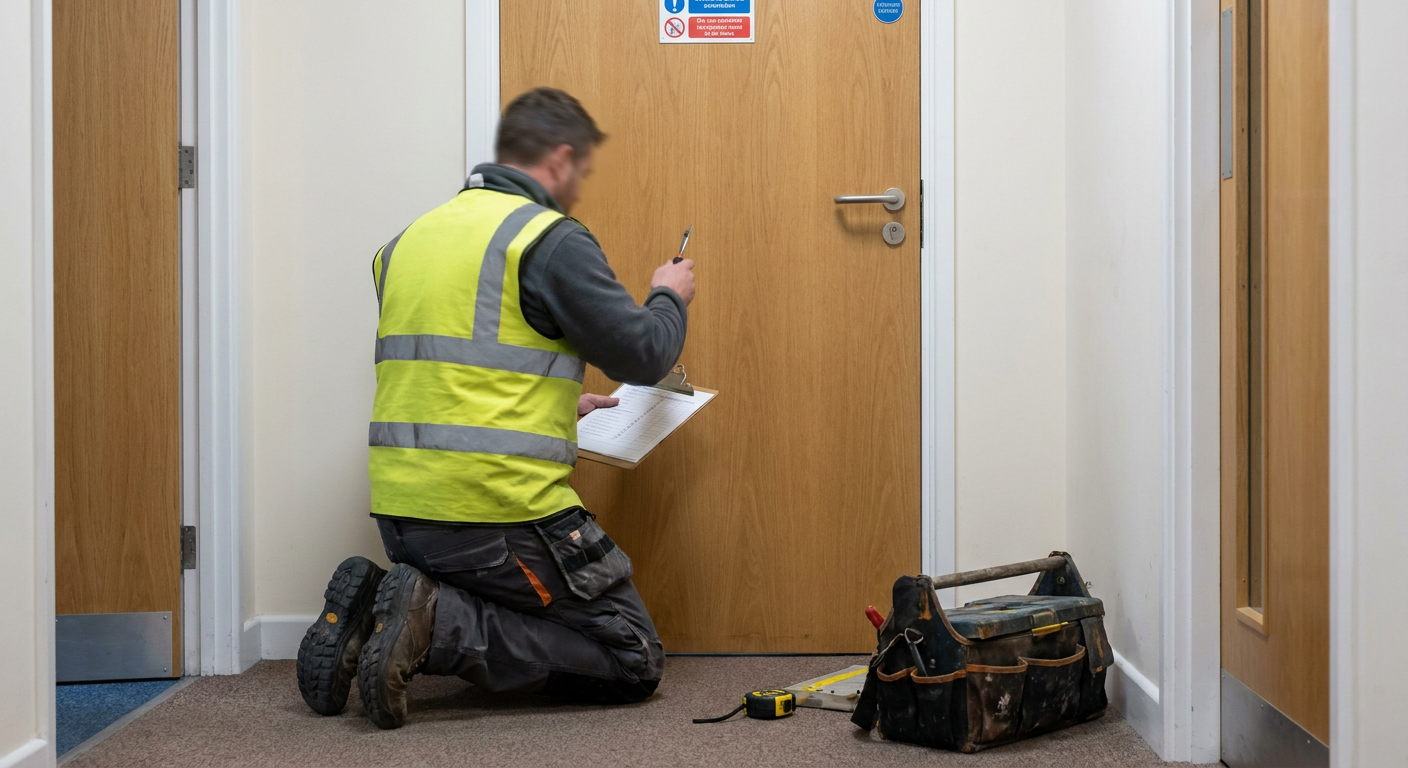
Uneven gaps around the frame
A visible gap wider than a few millimetres along the top or sides suggests the door has warped or the hinges have dropped.
- 2
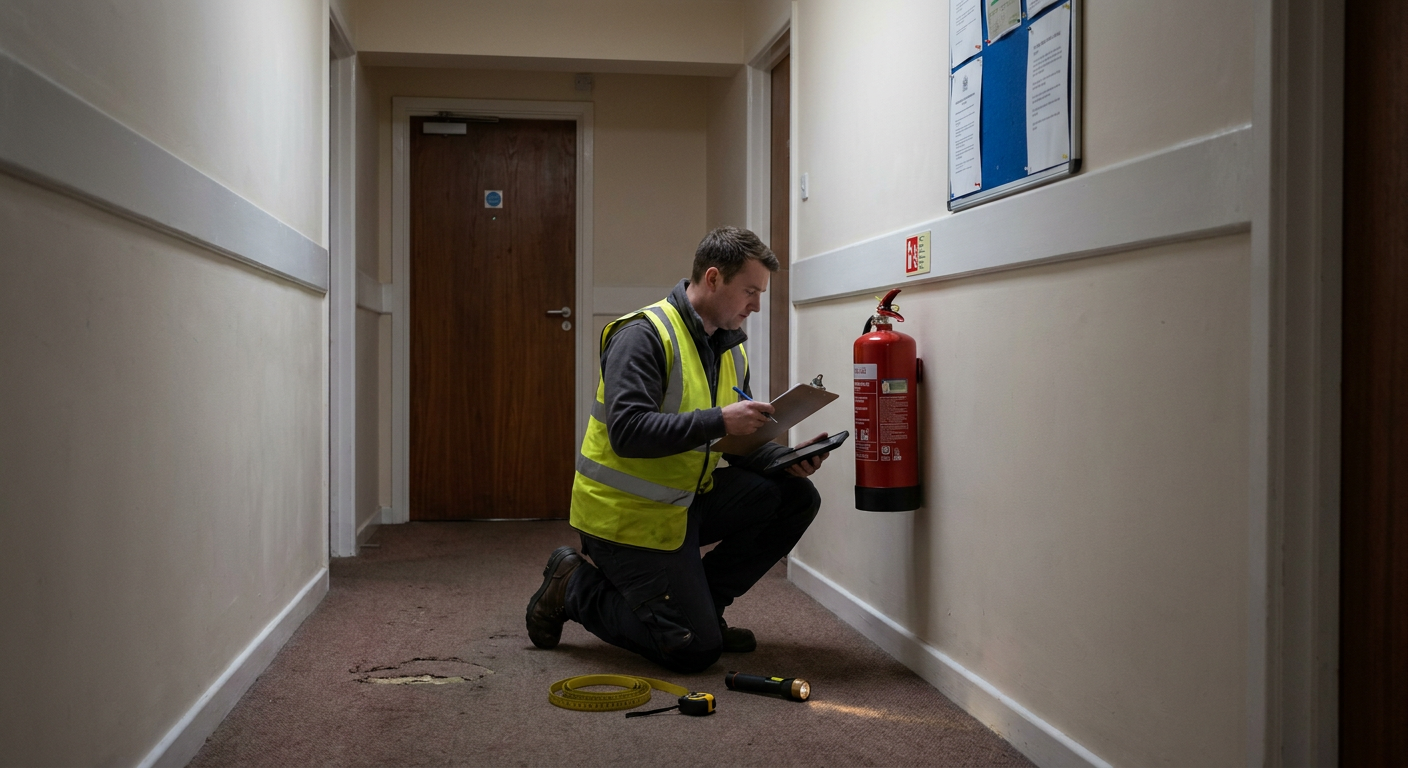
Door does not latch on its own
If the door drifts shut but bounces off the frame instead of clicking into the lock, the closer may need adjustment or replacement.
- 3
Damaged or painted-over seals
Intumescent strips should be flush and unpainted. Cracks, peeling paint or missing sections mean the seal cannot expand properly in a fire.
- 4
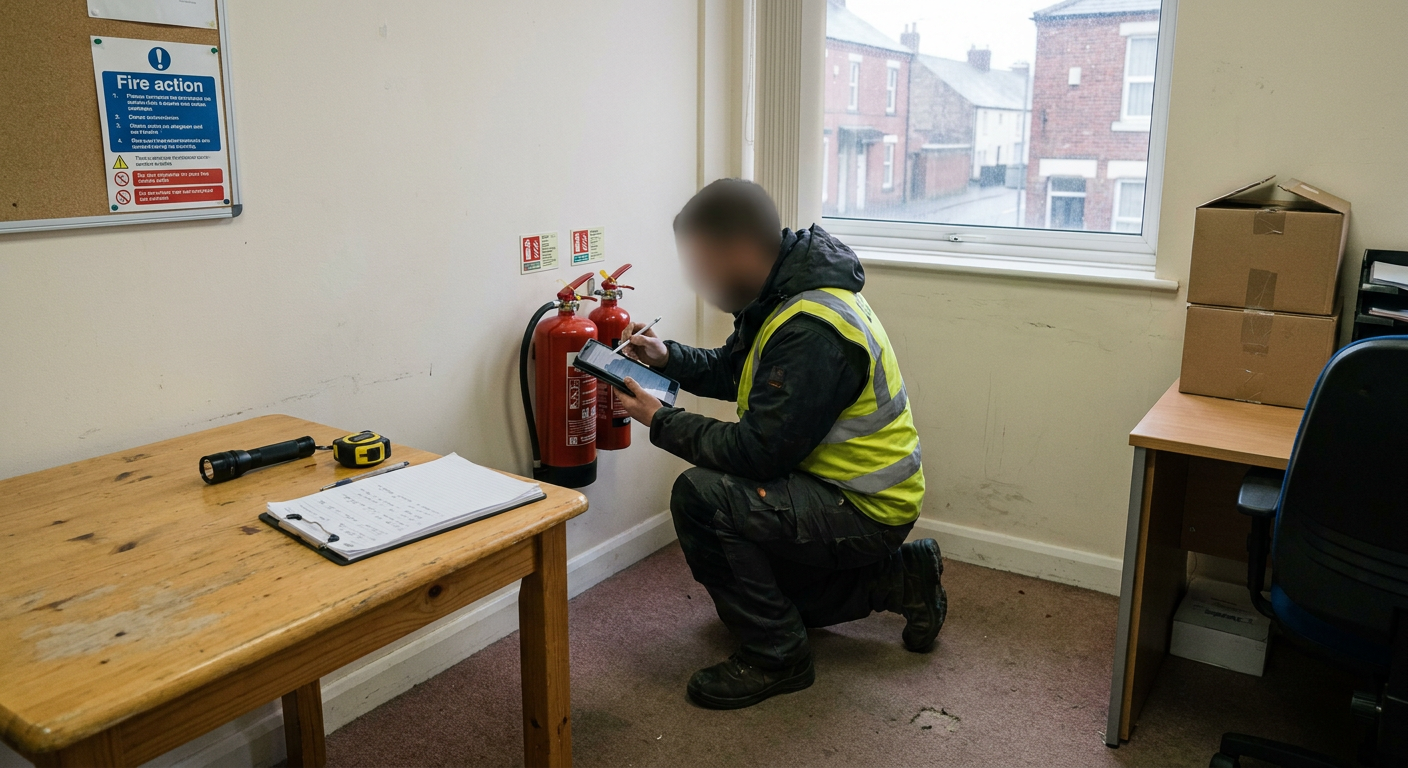
Cracked or unmarked glass
A pane in a fire door must carry an etched rating mark to show it can withstand heat. Glass without this mark, or with visible cracks, may not hold back smoke and flame long enough.
- 5
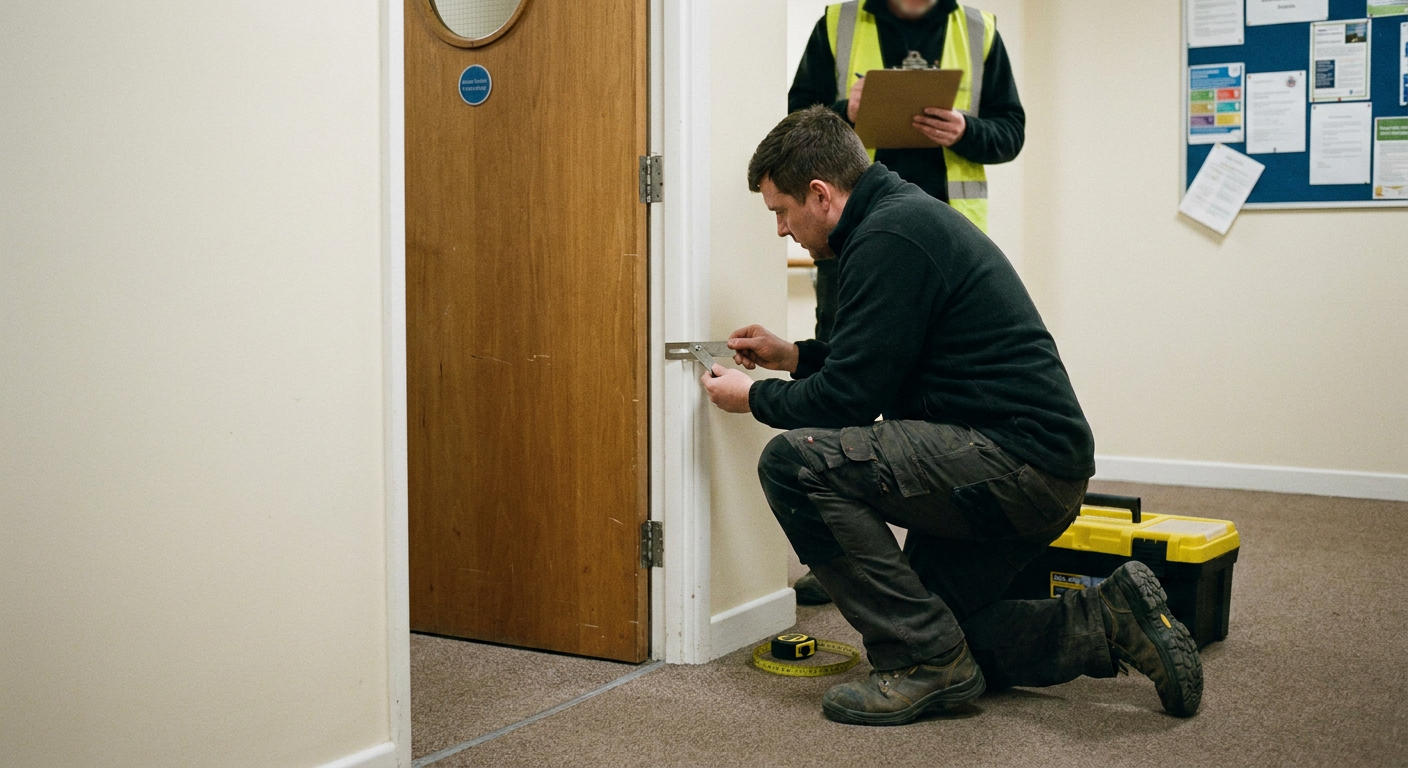
Loose or missing hinge screws
Hinges should sit tight against the timber. Visible movement, missing screws or rust streaks indicate the fixing is failing.
What affects the cost of a door inspection
Every building differs. The amount of work a specialist firm undertakes depends on the doors themselves and the state of the existing records.
- Number of doors
- More doors take longer to examine, measure and record in the final report.
- Type of door
- Glazed, double-leaf or steel doors require different checks and reference documents compared to standard timber ones.
- Access arrangements
- Doors in occupied homes need appointments with residents; communal doors in empty corridors can be checked faster.
- Existing documentation
- If previous reports or certificates are missing, the specialist firm spends additional time establishing the baseline specification.
The specialist firm explains the full cost of the particular job before any work is agreed.
Ask about checking the fire doors in your home
Send the details of your building and the doors you are concerned about. A specialist firm reviews what you write and responds with advice. There is no fee for sending an enquiry and no commitment to book any work.
- No fee to enquire
- No obligation to proceed
- Local to Tunbridge Wells