Tunbridge Wells offices
Escape routes and travel distances in small offices
Read what fire risk assessors look for when checking escape routes in small offices. If you need a visit arranged, send the details through and it costs nothing to ask.
Escape Routes and Travel Distances in Small Tunbridge Wells Offices
Why travel distance matters in a small office
A small office in Tunbridge Wells might only have three or four desks, but the distance between any seat and the nearest exit still has to be safe. Travel distance is measured from the furthest point someone could be standing to the door that leads to a place of safety.
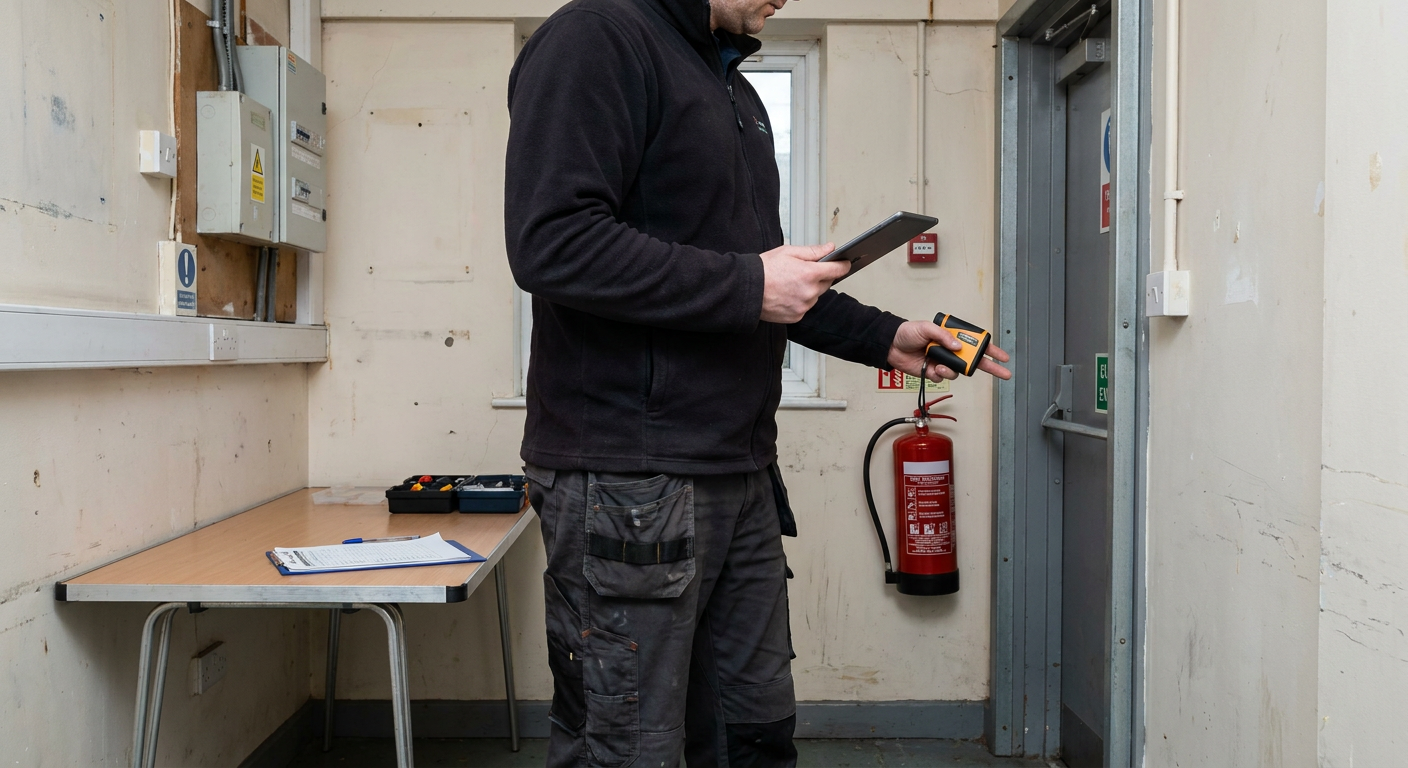
The limit depends on whether there is one direction to escape or more than one. In a room with a single exit, the maximum travel distance is shorter because smoke can block the only way out. A specialist carrying out a <a href="/what-we-cover/fire-risk-assessment-tunbridge-wells">fire risk assessment in Tunbridge Wells</a> measures these distances with a laser or tape and checks them against approved guidance.
Furniture layout changes things. Moving a filing cabinet or adding a partition wall can push a desk beyond the allowed distance. So the measurement is never done once and forgotten. It needs checking whenever the floor plan changes.
Keeping corridors and final exits clear
An escape route is only useful if someone can walk down it without stepping over boxes or squeezing past stacked chairs. Corridors in small offices tend to become storage areas slowly, one ream of paper at a time.
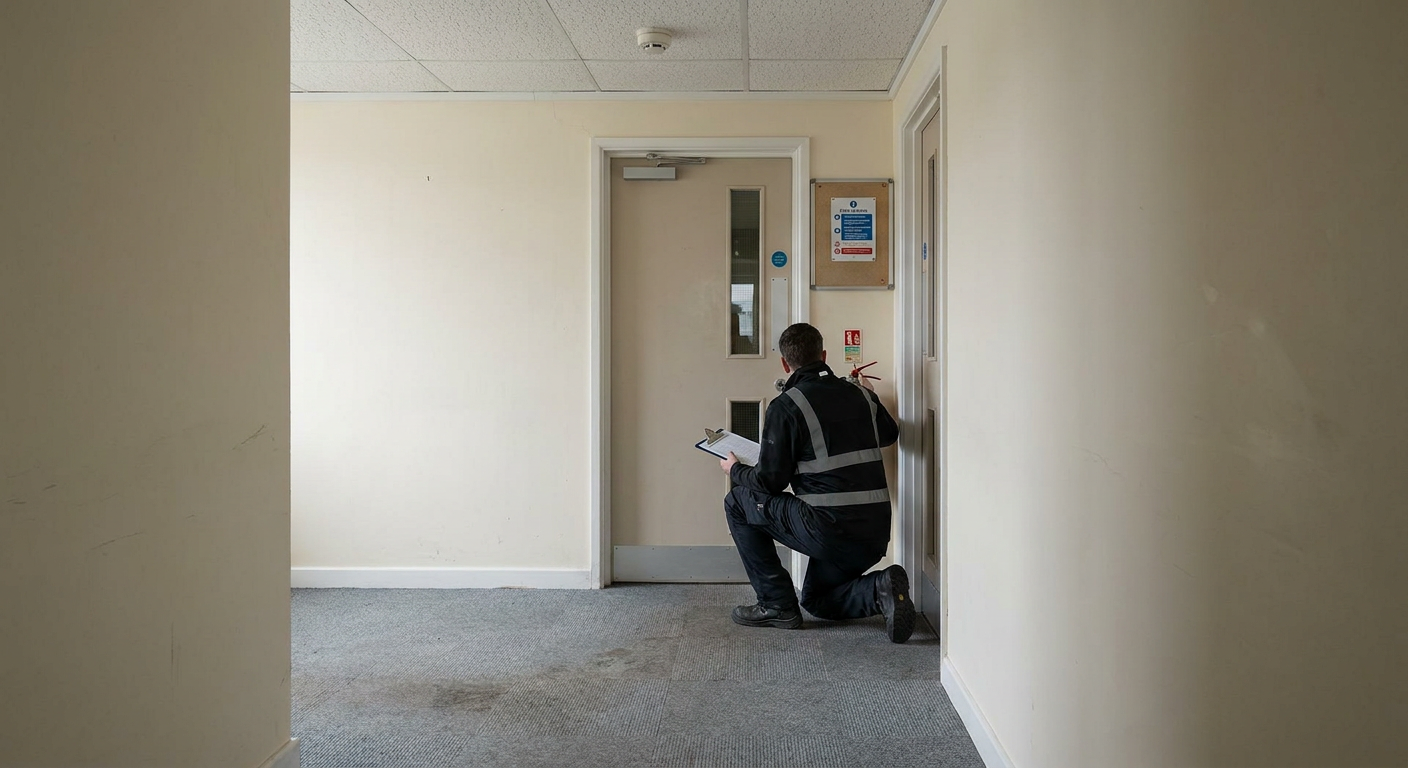
Final exits must open easily and immediately. A door held shut by a padlock, or one that requires a key from the inside, fails the basic requirement. Fire doors along the route also matter. A <a href="/what-we-cover/fire-door-inspection-tunbridge-wells">fire door inspection</a> checks that self-closers work, seals are intact and the leaf shuts fully into the frame every time.
Staff habits shape how usable a route stays. Training helps here. A session of <a href="/what-we-cover/fire-safety-awareness-training-tunbridge-wells">fire safety awareness training</a> reminds people why leaving coats on stairwell handles or propping open corridor doors creates a real problem during an evacuation.
Dead ends and rooms with a single way out
A dead end is a stretch of corridor where the only escape direction is back the way you came. If fire starts at the open end, anyone further along is trapped. Small offices often have them because the building was not designed as a workplace originally.
Approved documents set strict limits on dead-end lengths. Where a room has only one door, the space inside it counts as a dead end too. The assessor looks at the size of the room, the number of people using it and the nature of the work done there.
Sometimes the solution is adding a second exit. Other times it means limiting how many people use the room or changing what happens inside it. A <a href="/what-we-cover/fire-strategy-tunbridge-wells">fire strategy</a> document sets this out for the whole building so that future changes do not recreate the same hazard.
Signage, lighting and the human element
People under stress follow light and familiar shapes. Emergency lighting along an escape route ensures the path remains visible if the mains power fails. Signs with a running figure and directional arrow show which way to turn at each junction.
In a small office, staff know the building well. Visitors, delivery drivers or interview candidates do not. The <a href="/what-we-cover/fire-evacuation-plans-tunbridge-wells">evacuation plan</a> has to account for people who have never walked the route before. That usually means signs placed at eye level near every decision point.
Someone has to take responsibility for checking these things regularly. Many small firms appoint a nominated person rather than spreading the duty across everyone. A <a href="/what-we-cover/nominated-person-service-tunbridge-wells">nominated person service</a> provides someone trained to keep records, test alarms and make sure the written procedures match what actually happens on the day.
Ask about your office escape routes
Send the address and a brief note about the layout. A specialist firm will reply with what they recommend, and asking does not commit you to booking anything.
- No obligation to book
- Plain advice first
- Local specialists