Community buildings
Fire safety in churches, halls and community buildings
Send a free enquiry about fire risk management for your church or village hall. A specialist firm will call back to discuss what the building needs, with no obligation to book anything.
Fire safety in churches, halls and community buildings
Why these buildings carry different risks
Churches, village halls and community centres around Tunbridge Wells share a few traits that complicate fire safety. They are often old, sometimes listed, and built long before modern regulations existed. Thick stone walls might slow a fire, but narrow staircases and heavy wooden doors make leaving one harder.
The people inside change from hour to hour. A toddler group on Tuesday morning uses the space differently from a choir practice on Thursday evening. Visitors rarely know the layout, where the exits are, or what the alarm sounds like. That lack of familiarity is the main problem a fire risk assessment addresses.
A specialist firm will look at how the building is actually used rather than how it was designed. If you manage a hall or place of worship, arranging a [fire risk assessment in Tunbridge Wells](/what-we-cover/fire-risk-assessment-tunbridge-wells) is the starting point. The assessor examines escape routes, ignition sources and the people most likely to be present.
Seating layouts and keeping exits clear
Folding chairs stacked against a wall look harmless until someone needs to leave quickly. In a busy hall, seating arrangements can block the very paths people need to reach a door. Fire safety depends on keeping travel distances short and routes unobstructed at all times.
The law does not dictate exactly where every chair goes, but it does require that anyone inside can reach a place of safety without confusion. Stewards or volunteers setting up for an event need to know which aisles must stay open and which doors cannot be locked while the room is occupied.
An [evacuation plan](/what-we-cover/fire-evacuation-plans-tunbridge-wells) records these decisions so they survive changes in committee members or booking clerks. It sets out who checks the exits before an event starts and what happens if a route becomes blocked during one. For smaller rooms, the principles of [escape routes and travel distances](/stories/escape-routes-and-travel-distances-in-small-offices) apply just as strictly.
Fire doors in older and listed buildings
Original oak doors in a parish church or a Victorian hall are part of the building's character, but they were never made to hold back smoke and flame. Retrofitting them to meet current standards requires care, especially when the structure is listed or sits in a conservation area.
A specialist will check whether existing doors close fully under their own weight, whether the gaps around the edges are within tolerance, and whether intumescent strips have been fitted correctly. These inspections happen regularly because hinges sag and seals degrade over time. Guidance on [how often fire doors should be checked](/what-the-law-asks/fire-door-check-frequency-tunbridge-wells) applies to community buildings just as it does to commercial premises.
If the building has multiple uses, such as a hall with a flat above it, the separation between those spaces matters enormously. Work on [compartmentation](/what-we-cover/compartmentation-survey-tunbridge-wells) ensures that a fire starting in one area does not spread unnoticed into another while people sleep or gather upstairs.
Alarms, extinguishers and testing routines
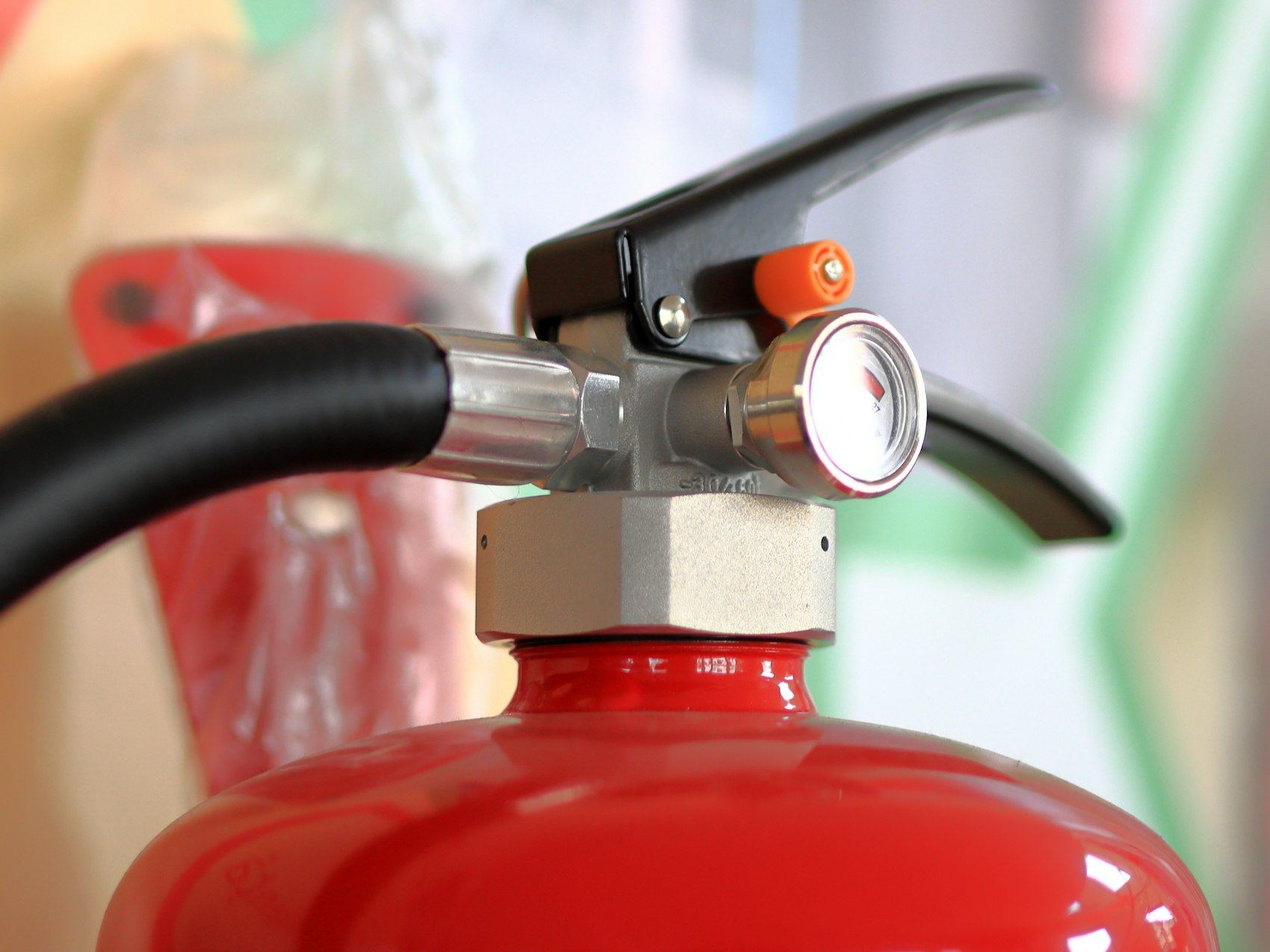
A portable extinguisher tucked behind a curtain in a vestry is useless if nobody remembers it is there. Community buildings accumulate equipment over decades, often donated or left behind by previous users, and the mix is rarely coherent.
A specialist firm will review what is installed, confirm it suits the actual hazards present, and set up a schedule for servicing. Alarms need testing too. Battery-operated smoke detectors in a small hall might suffice, but a larger church with a kitchen and an upper gallery usually requires an interconnected system so that a warning in the boiler room reaches the nave instantly.
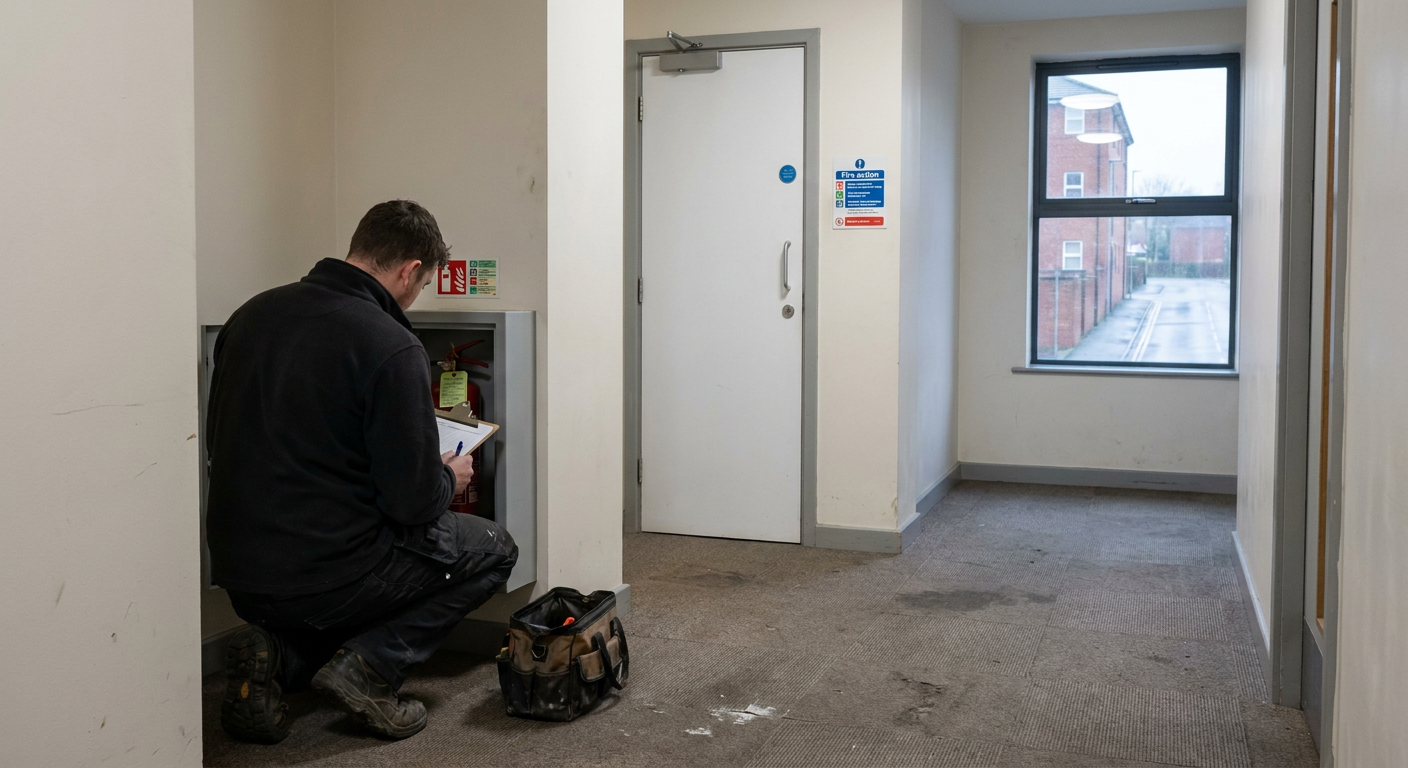
Regular [alarm and extinguisher checks](/what-we-cover/fire-alarm-and-extinguisher-testing-advice) form part of the routine maintenance any responsible person should oversee. The records from these tests matter if the local fire authority ever asks to see them.
Who is responsible and what training helps
Every community building has a responsible person. In a church it might be the vicar or a churchwarden. In a village hall it is usually the chair of the management committee. That person carries the legal duty to ensure fire precautions are adequate, regardless of whether they receive payment for the role.
Understanding those [responsible person duties](/what-the-law-asks/responsible-person-duties-tunbridge-wells) is the first step. The second is making sure the volunteers who unlock the doors and switch on the heaters know what to do if something goes wrong. Formal [fire safety awareness training](/what-we-cover/fire-safety-awareness-training-tunbridge-wells) gives regular users the confidence to raise an alarm, direct visitors to an exit and avoid common mistakes like propping open fire doors for ventilation.
For larger events, appointing specific stewards and giving them [fire warden training](/what-we-cover/fire-warden-training-tunbridge-wells) means someone present knows the plan and can act on it immediately.
Seasonal hazards and changing use
Harvest festivals, Christmas fairs and summer fetes change how a community building is used. Fabric drapes, paper decorations, temporary lighting and cooking equipment add risks that do not exist during a quiet weekday afternoon. The guidance on [Christmas decorations and fire safety](/what-the-law-asks/christmas-decorations-fire-safety) written for offices applies equally to a decorated church nave.
Any significant change in how a building is used should prompt a review of the existing [fire risk assessment](/what-we-cover/fire-risk-assessment-tunbridge-wells). Adding a commercial kitchen to a hall that previously only boiled kettles alters the hazard profile entirely. So does hosting overnight guests for the first time. A specialist firm will look at what has changed and decide whether the current plan still holds or needs rewriting.
Specialist firms working across [West Kent](/west-kent), including [Tonbridge](/west-kent/tonbridge) and [Penshurst](/west-kent/penshurst), understand the particular stock of rural and semi-rural buildings in this area. They know which construction details cause problems and what solutions satisfy both the fire authority and heritage officers. If you manage a building like this, [arranging an assessment](/how-enquiries-work/how-we-work-tunbridge-wells) clarifies exactly where you stand.
Ask about your church or hall
Send the details of your building and how it is used. A specialist firm will read the enquiry and call back to discuss what is needed, with no obligation to proceed.
- Free initial discussion
- No obligation to book
- Local specialists respond